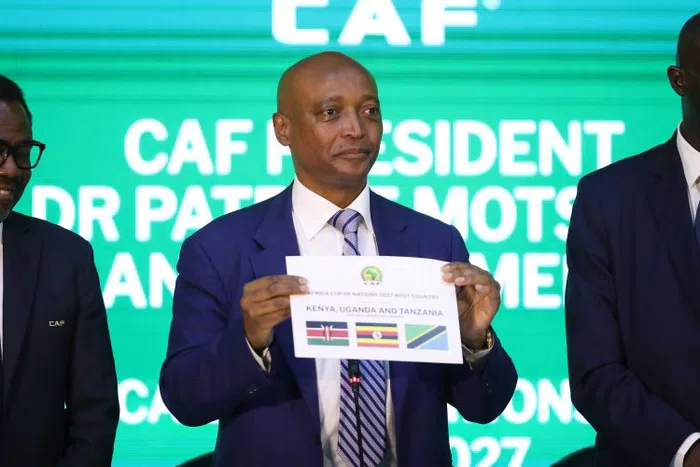
NAIROBI, Kenya — The AFCON 2027 Pamoja Bid is currently facing its most significant hurdle yet as a stark financial disparity emerges between the three host nations. While the vision of a unified East African tournament captured the continent’s imagination, the reality on the ground in Nairobi suggests a growing crisis. As of today, Kenya remains the only partner in the tripartite agreement that has yet to remit its mandatory hosting fees to the Confederation of African Football (CAF), even as neighbors Uganda and Tanzania have moved ahead with full compliance.
The Financial Disconnect
The “Pamoja” agreement required each participating nation to contribute a USD 30 million (Sh3.9 billion) hosting fee to CAF. According to reports from regional sports authorities, both Kampala and Dar es Salaam have successfully cleared these dues, signaling their total readiness to the continental governing body.
In Kenya, however, the situation is more complex. Sports Principal Secretary Elijah Mwangi recently admitted to the National Assembly Committee on Sports that the Sh3.9 billion was not originally captured in the 2025/2026 budget cycle. This oversight has forced the Ministry into a desperate race against time, relying on a supplementary budget currently under review by the National Treasury. With the CAF deadline set for March 30, 2026, any further delay could technically allow CAF to revoke Kenya’s hosting status, potentially leaving the tournament to be hosted solely by its more prepared neighbors.
Infrastructure at a Standstill
Beyond the hosting fees, the physical infrastructure supporting the joint effort is showing signs of neglect due to massive unpaid debts to contractors. The state of Kenya’s two most iconic stadiums—Kasarani and Nyayo—is particularly concerning to both fans and stakeholders.
At Nyayo National Stadium, the contractor has reportedly vacated the site entirely. Sources close to the project indicate that the government owes over Sh2.6 billion in arrears for ongoing renovations. Similarly, at the Moi International Sports Centre, Kasarani, work has been scaled back to a minimum. The contractor there is reportedly owed Sh3.7 billion, leading to a significant reduction in the workforce and a halt in specialized installations required for CAF certification.
A “Dry Run” Amidst Uncertainty
Despite these mounting challenges, Sports Cabinet Secretary Salim Mvurya remains optimistic. To demonstrate that the country can still handle large-scale events, the Ministry has organized a FIFA Women’s International Friendly Series at Nyayo Stadium from April 11–15, 2026.
The tournament will feature the Harambee Starlets alongside teams from Australia, India, and Malawi. While this “dry run” is intended to test security protocols, ticketing systems, and pitch quality, critics argue that hosting friendly matches does little to solve the multi-billion shilling debt crisis that threatens the long-term viability of the project.
What is at Stake?
If Kenya fails to meet the March 30 deadline, the political and social fallout could be immense. The AFCON 2027 Pamoja Bid was touted as a major win for the current administration, promising job creation through stadium construction and a boost to the tourism sector. Being “left behind” by Uganda and Tanzania would not only be a blow to national pride but also a missed opportunity for the Sh100 billion economic windfall expected from the tournament.
As the clock ticks toward the end of the month, all eyes are on the National Treasury. The question remains: can Kenya bridge the Sh10 billion gap in fees and contractor arrears in time to remain a legitimate partner in the East African dream?