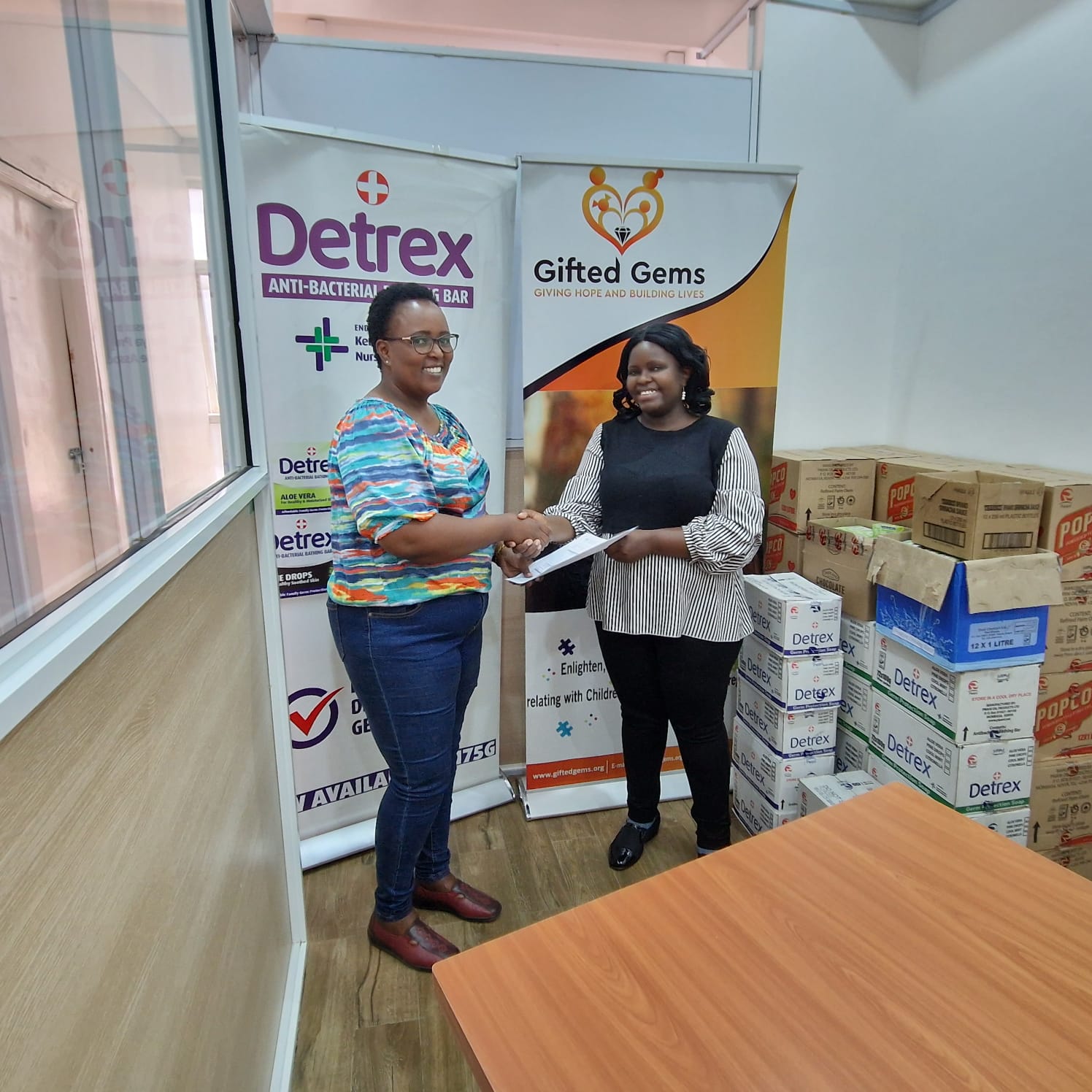
Five hundred beneficiaries from Kibiku and surrounding communities in Kiambu County received free medical care, disability support and preventive health services earlier this month during a community outreach led by autism non-profit, Gifted Gems, and supported by Pwani Oil Products Limited (Pwani Oil).
The Medical and Autism Awareness Outreach 2026 aimed to address persistent gaps in Kenya’s primary healthcare and developmental support systems, with Pwani Oil also contributing hygiene products from its Detrex anti-bacterial soap brand, to complement the medical and educational services provided.
The initiative marked a significant scale-up from the 2025 edition, which reached more than 400 people, indicating a steady increase in demand for both basic healthcare and specialised services. This growth was particularly evident in the need for support around developmental conditions such as autism.
Read Also: Pwani Oils Set For 2K Schools Soap Donation
Pwani Oil, Kenya Redcross Partner for Ramadhan CSR
In Kenya, autism is estimated to affect around 4 per cent of the population, equivalent to roughly 2.2 million people, according to data cited by the Autism Society of Kenya, although official national statistics remain limited. This places the country above the global average of about 1 in 100 children, and highlights the scale of unmet need, particularly in early diagnosis and intervention.
“We are seeing increasing awareness of autism, but access to diagnosis, therapy and caregiver support remains a major challenge for many households,” said Caroline Wathigi, the Executive Director of Gifted Gems.
The outreach provided a comprehensive, family-centred package of services, including free and subsidised medical consultations, health screenings, referrals and follow-up care. It also incorporated autism and disability awareness education, alongside preventive and promotive health sessions focused on early detection, nutrition and hygiene.
This aligns with Kenya’s ongoing progress toward universal health coverage, which is aimed at reducing financial barriers and expanding access to essential services. For families with children on the autism spectrum, who often require long-term therapy and specialised care, this focus on broader coverage is particularly important in supporting more consistent and affordable care.
“Our support for this outreach reflects a commitment to partner with community organisations that are delivering practical, high-impact solutions, especially for vulnerable groups such as children with developmental conditions,” said Polycarp Nyawuana, the Regional Route to Market Manager at Pwani Oil.
The programme also placed emphasis on caregiver support, offering psychosocial and mental wellness sessions to parents and guardians in recognition of the broader social and economic pressures they face. Evidence from local studies suggests that autism in Kenya is often associated with challenges such as limited school access and high caregiver stress, particularly in contexts where awareness and specialised services remain limited.
Experts note that autism underdiagnosis is a significant issue in many African countries, including Kenya. Local research has similarly pointed to gaps in data, with smaller studies indicating measurable levels of autistic traits among Kenyan youth, alongside links to socioeconomic factors and access to care.
“Community outreach models like this help bridge critical gaps, particularly in early screening and awareness. They create entry points for families who might otherwise never access these services,” Wathigi added.