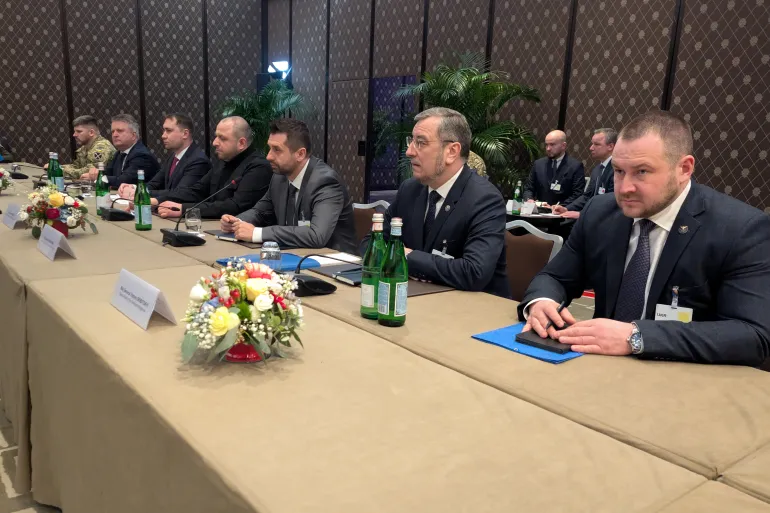
The Russia-Ukraine Geneva peace talks officially commenced on Tuesday, February 17, 2026, marking a pivotal yet fragile moment in the four-year conflict. While high-level delegations from Kyiv and Moscow gathered at the Intercontinental Hotel in Switzerland, the atmosphere remained strained as some of the most intensive Russian airstrikes of the year targeted Ukrainian civilian infrastructure.
Diplomacy Under Direct Fire
The latest session of the Russia-Ukraine Geneva peace talks is the third trilateral meeting involving direct mediation from the United States. Special envoys Steve Witkoff and Jared Kushner led the American delegation, attempting to facilitate a “road map” for a ceasefire. However, the talks were preceded by a massive Russian assault involving nearly 400 drones and 29 missiles.
The southern port city of Odesa bore the brunt of the attack, with DTEK reporting “extremely serious” damage to its energy facilities. This left tens of thousands of residents without heat or water in freezing temperatures, a move Ukrainian President Volodymyr Zelenskyy characterized as a deliberate attempt by Moscow to undermine the Russia-Ukraine Geneva peace talks.
Territorial Stalemate and “Red Lines”
A central focus of the Russia-Ukraine Geneva peace talks is the fate of occupied lands. As of early 2026, Russia maintains control over approximately 20% of Ukraine, including Crimea and parts of the Donbas.
- Russian Demands: Lead negotiator Vladimir Medinsky reiterated Moscow’s insistence that Ukraine fully cede the remaining 20% of the Donetsk region.
- Ukrainian Sovereignty: National Security and Defense Council Secretary Rustem Umerov emphasized that while Ukraine is working “constructively,” territorial integrity remains non-negotiable.
- The DMZ Proposal: Discussion of an 800-mile Demilitarized Zone (DMZ) has surfaced, but a rift persists over whether UN peacekeepers or local monitors will enforce the buffer.
The U.S. Mediation Strategy
The Trump administration has set a firm June 2026 deadline to reach a settlement. President Donald Trump has applied pressure to both sides, urging Kyiv to “come to the table fast” while warning Moscow of increased military aid to Ukraine if a “just” deal is rejected.
In a rare display of dual-front diplomacy, the U.S. envoys also held indirect nuclear talks with Iran in the same city. The goal is to stabilize both the European and Middle Eastern theaters simultaneously, though analysts warn that the concurrent military posturing—including U.S. carrier movements in the Arabian Sea and Russian missile drills—complicates the Russia-Ukraine Geneva peace talks.
Military Realities vs. Diplomatic Goals
On the battlefield, the situation remains a grinding war of attrition.
- Donetsk Front: Russian forces continue offensive operations near Pokrovsk, utilizing small assault groups and drone technology.
- Kharkiv Buffer: Moscow is attempting to push Ukrainian forces back from its international border to create a defensible zone.
- Ukrainian Counter-Strikes: Hours before the talks, Ukrainian drones struck an oil terminal in southern Russia and a chemical plant in the Perm region, 1,000 miles from the border.
As the Russia-Ukraine Geneva peace talks enter their second day on Wednesday, the primary objective is to secure a humanitarian pause. Without a significant shift in either side’s territorial stance, the prospect of a full peace treaty remains distant.