Companies in Kenya are being urged to accelerate disability inclusion in the workplace, with new insights showing that diversity is not just a social obligation but a key driver of business performance.
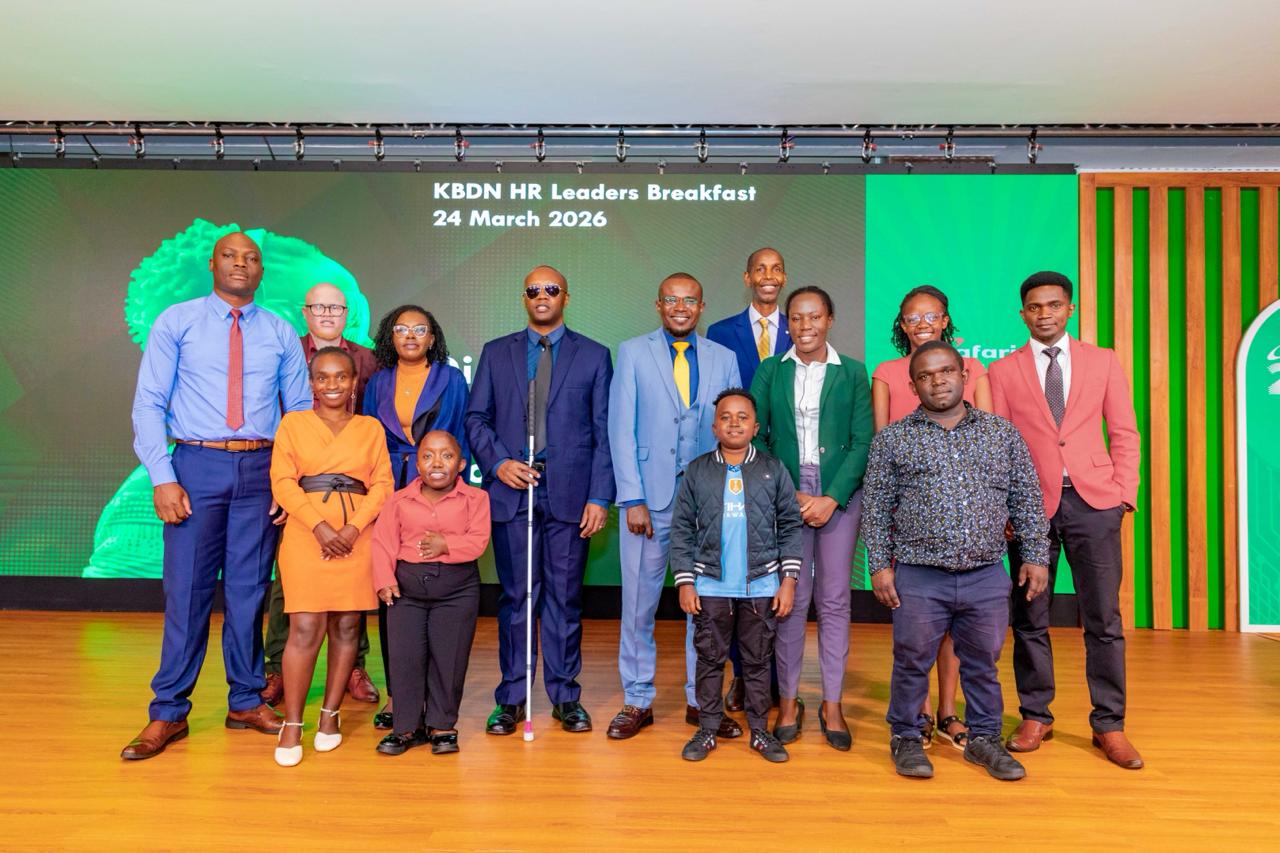
This emerged during the Kenya Business and Disability Network HR Leaders Breakfast where corporate leaders highlighted the growing importance of creating inclusive work environments for persons with disabilities.
According to insights shared at the forum, organizations that prioritize diversity, equity and inclusion (DEI) are seeing tangible benefits, including stronger decision-making, improved innovation and higher employee retention.
Speaking at the forum, Safaricom Group Chief People Officer, Florence Nyokabi reiterated that companies should start from where they are because diverse teams are more innovative as they understand customers better, and they make better decisions.
“It doesn’t matter where you are. Start now, take the one step to start the journey of one thousand miles. For Safaricom to be at 4 per cent currently, it took the courage to employ the first disabled person in 2001. For the HR leaders in the room we have learnt that it doesn’t matter where you are starting there. Inclusion is not only the right thing to do but the smart thing to do,” She stated.
Data presented at the forum showed that companies with above-average diversity report up to 19 per cent higher revenue, while organizations with strong DEI practices experience up to 50 per cent lower staff turnover.
Read Also: Safaricom Deploys Privacy Shield to Counter Rising Cyber Threats
Why You Won’t See Full Phone Numbers in Your Texts: The New M-Pesa Privacy Feature Explained
In addition, diverse teams were found to make better decisions in 87 per cent of cases and are twice as effective at attracting talent.
Corporate data shared at the event also revealed gradual progress in disability inclusion within the workforce over the years.
For Safaricom, its first employee with a disability was hired in 2001, with more structured diversity and inclusion efforts taking shape in 2016. By 2026, employees with disabilities accounted for about 4 per cent of the workforce, up from 1.7 per cent in earlier years.
The journey has included the establishment of formal diversity frameworks and commitments such as signing global disability inclusion charters following international summits.
However, experts at the forum noted that hiring persons with disabilities is only the first step, warning that true inclusion goes beyond numbers.
“Diversity is a fact, inclusion is a choice, and belonging is the outcome.”
They emphasised that organisations must intentionally create environments where employees with disabilities feel valued, supported and able to contribute fully.
This includes investing in accessible workplaces, adapting technologies, and fostering inclusive leadership and workplace cultures.
The discussions also broadened the concept of diversity beyond disability to include gender, age, socio-economic background, and neurodiversity, among others.
https://x.com/SafaricomPLC/status/2036448790106771529?s=20
Experts noted that companies that embrace different forms of diversity demographic, experiential, and cognitive—are better positioned to respond to complex business challenges and evolving customer needs.
As Kenya’s corporate sector continues to evolve, disability inclusion is increasingly being framed as both a moral responsibility and a strategic advantage.
With growing evidence linking inclusion to profitability and innovation, companies are now under pressure to move faster in integrating persons with disabilities into their workforce not just as employees, but as equal contributors to business growth.