NAIROBI, KENYA — A severe fuel crisis has forced the national government to lay bare the extraordinary financial mechanics keeping the domestic economy from an inflationary freefall. Following a turbulent week marked by public transport disruptions, localized shutdowns, and intense negotiation, the state has deployed a massive multi-billion-shilling buffer to keep transport networks moving and businesses afloat.
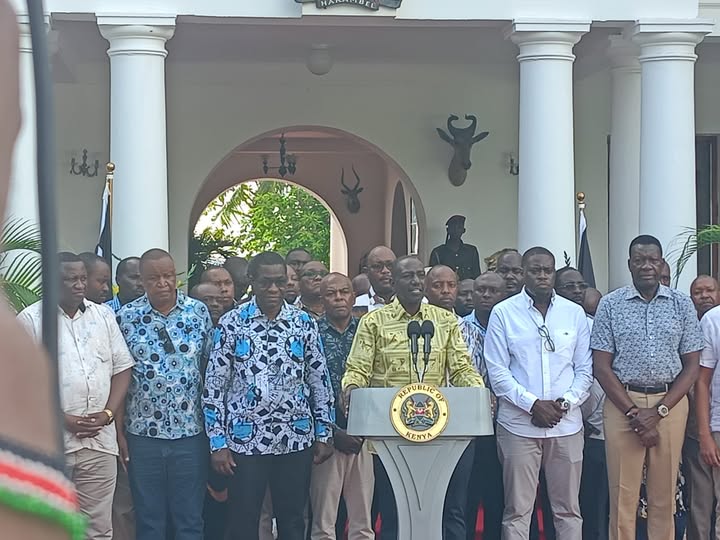
In a high-stakes national address delivered from State House, Mombasa, President William Ruto defended his administration’s economic stewardship amid the deepening fuel crisis. The Head of State revealed that the government has committed a total of Ksh 28.19 billion across the consecutive April–May and May–June pricing cycles. This emergency framework consists of direct pump stabilization subsidies and massive foregone tax revenues intended to keep retail energy costs artificially capped.
The disclosure comes at a critical juncture for local markets. The Energy and Petroleum Regulatory Authority’s (EPRA) recent pricing review sent diesel rocketing by an unprecedented Ksh 46.29 to peak at an all-time high of Ksh 242.92 per litre in Nairobi, while super petrol climbed further out of reach at Ksh 214.25. Following intense pressure from transport operators, an emergency price addendum subsequently eased diesel down to Ksh 232.86 per litre, while raising kerosene to Ksh 191.38 per litre to minimize the risk of motor fuel adulteration.
Inside the Sh28 Billion Stabilization Buffer
The state’s emergency fiscal intervention reflects the sheer magnitude of the fuel crisis. According to executive briefs, the multi-billion-shilling shield was split across two distinct structural rescue operations to cushion an already struggling private sector:
-
Direct PDF Subsidies: The government channeled Ksh 13.74 billion directly from the Petroleum Development Fund (PDF) to local oil marketing companies to absorb a massive percentage of international landed-cost spikes.
-
The VAT Slashing: Working via fast-tracked legislative amendments, the administration aggressively cut VAT on petroleum products from 16% down to 8%. This single legislative tax concession forced the National Treasury to forego Ksh 14.43 billion in anticipated revenues.
The Unmasked Projections: Without these structural cushions, raw landed costs would have driven Super Petrol past the devastating milestone of Ksh 230.12 per litre. Worse, Diesel would have rocketed to Ksh 277.75, and Kerosene would have hit Ksh 270.00, effectively threatening a total halt of the country’s agricultural, transport, and manufacturing sectors.
To offer immediate breathing room to a bleeding logistics industry, President Ruto announced a targeted Ksh 10 reduction per litre on diesel to be factored into the upcoming June–July pricing cycle. Following late-night consultations with stakeholders, transport sector leaders officially called off their planned nationwide strike, expressing temporary satisfaction with the government’s concessions.
The Maritime Choke Point: The Strait of Hormuz Factor
Defending its economic stewardship against sharp critics who labeled the hyper-inflation a domestic policy failure, the administration contextualized the Kenya fuel crisis as an aggressive external emergency. The state tied local price hikes directly to severe geopolitical disruptions in the Middle East, specifically highlighting maritime blockages around the Strait of Hormuz—a vital shipping artery through which roughly 20% of global petroleum consumption passes daily.
Because Kenya imports 100% of its refined petroleum products, the domestic market was immediately exposed to the landed-cost shock wave. Data reveals that local diesel landed costs jumped by over 20% in a single month, leaving the local economy highly vulnerable.
The executive fiercely pushed back against opposition demands to completely abolish all fuel taxes and levies, calling such proposals fiscally reckless measures that would instantly starve funding from critical public services like universal healthcare, education, and infrastructure development.
The G-to-G Debate: Real Shield or Rigid Illusion?
The political battlefield has now focused squarely on the government’s signature Government-to-Government (G-to-G) fuel import framework. Introduced as a radical alternative to the open tender system, the deal allows Kenya to source refined fuel from state-owned Gulf oil giants on flexible, deferred credit terms.
The administration maintains that the G-to-G deal is the primary mechanism preventing an outright currency collapse during this prolonged Kenya fuel crisis. Under the old system, local oil firms scrambled monthly for scarce US dollars to pay for spot cargoes, rapidly devaluing the Kenya Shilling. By deferring payments, the state has stabilized the local currency around the 129.56 zone against the greenback, preventing a double-compounded inflation hit.
“Without the G-to-G framework, the country would be facing a major crisis of foreign currency and a major crisis of fuel supply,” the President insisted, assuring motorists that national fuel reserves remain completely secure with zero threat of physical product shortages.
Economic Contraction and Growing Civic Friction
Despite the multi-billion-shilling state shield, the economic reality on the ground remains deeply fractured. Private sector activity has contracted sharply for consecutive months as small and medium enterprises absorb punishing operational overheads. Domestic inflation has climbed past 5.6%, heavily driven by a 10% surge in transport costs and an 8.8% spike in food prices, as transporters pass the fuel premium directly to consumers.
This sustained economic pain is fundamentally reshaping Kenya’s civic landscape. Public demonstrations across major urban centers like Nairobi, Mombasa, and Nakuru have more than doubled over the past two years. Crucially, empirical data shatters traditional political narratives: regular community residents and labor unions organized the overwhelming majority of these demonstrations, with direct economic survival concerns completely eclipsing abstract political friction.
The emergency shield has bought the government time and cleared the roads, but as long as global supply corridors remain a geopolitical tinderbox, the underlying Kenya fuel crisis remains far from resolved.