Sifuna claims he is still ODM Secretary-General, escalating a deepening leadership crisis within the Orange Democratic Movement (ODM) after the party’s National Executive Committee (NEC) announced in Mombasa that he had been removed from office.
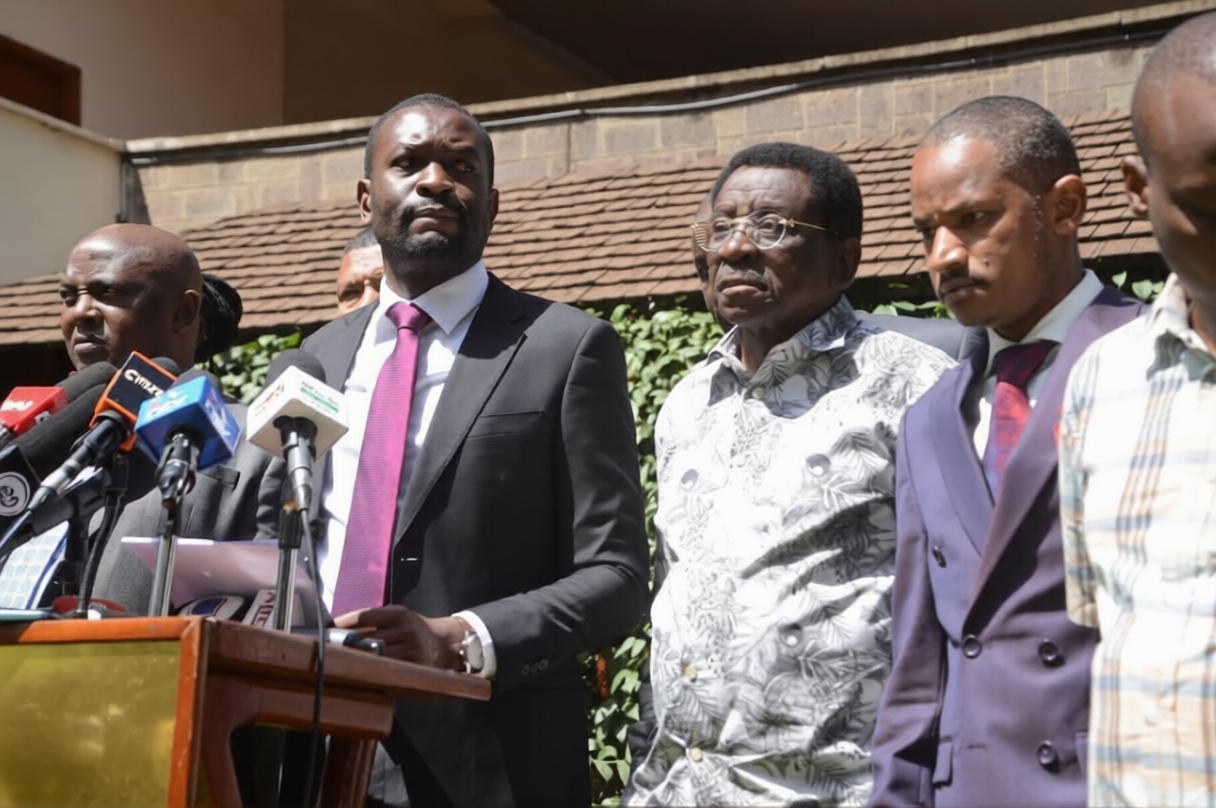
In a statement released during a press briefing, Edwin Sifuna dismissed claims that he had been fired, insisting that no constitutional process had been followed to remove him and that he remains the party’s duly elected Secretary-General. He maintained that any attempt to oust him outside the provisions of the ODM constitution was invalid and unenforceable, adding that he knows where the party’s official certificate is kept. Also present at the press briefing were ODM Secretary-General Babu Owino, Siaya Governor James Orengo, among others, who witnessed Sifuna’s statement and the unfolding leadership dispute.
The sharp rebuttal followed an announcement made during an ongoing NEC meeting in Mombasa, where ODM Deputy Secretary-General Hon Catherine Omanyo told a press conference that the committee had resolved to remove Sifuna from the powerful party position with immediate effect and replace him on an interim basis.
Omanyo said the decision was taken in the interest of party unity at a time when ODM is engaged in nationwide consultations and trying to unite Kenyans under the broad-based government arrangement. She accused Sifuna of repeatedly skipping critical party meetings and acting in a manner that undermined collective decisions made by the party leadership.
However, Sifuna rejected the NEC’s position, arguing that the committee lacks unilateral authority to remove an elected Secretary-General without invoking formal disciplinary procedures as outlined in the party constitution. He said no charges had been presented against him, no disciplinary hearing convened, and no official communication issued to notify him of his alleged removal. He also emphasized that he remains committed to serving the party and ensuring that ODM continues to champion democratic principles and the interests of its supporters across the country.
The standoff has exposed deep fractures within ODM’s top leadership, raising concerns among party insiders about internal cohesion less than two years before the 2027 General Election. Allies of Sifuna contend that the move to declare his removal is politically motivated and aimed at silencing dissenting voices within the party.
At the heart of the fallout is ODM’s evolving relationship with President William Ruto’s Kenya Kwanza administration. While sections of the party leadership have embraced a broad-based cooperation framework with the government, Sifuna has been among the most vocal critics, warning that the arrangement risks eroding ODM’s identity as a credible opposition force.
His absence from the Mombasa NEC meeting further fuelled speculation of an imminent showdown. Instead of attending the session, Sifuna joined the Senate Energy Committee Stakeholders Forum in Nairobi, citing parliamentary responsibilities. Party hardliners viewed the move as defiance, while his supporters argued it reflected respect for institutional duty and constitutional order.
Political analysts say the conflicting claims over the Secretary-General position point to a potential legal and political battle that could spill into the courts if not resolved internally. They warn that prolonged uncertainty over leadership could damage ODM’s public image and distract the party from preparations for the next election cycle. Observers also note that the situation could influence upcoming strategic decisions and alliances within the party, making it critical for leadership to address the dispute transparently.
As of now, ODM has not issued a comprehensive official statement clarifying the legal status of the NEC decision or outlining a roadmap to resolve the impasse. With Sifuna adamant that he remains in office and party officials insisting he has been replaced, the leadership standoff is expected to intensify in the coming days.
For observers, the unfolding dispute represents a critical test of ODM’s commitment to internal democracy, rule-based governance, and unity at a time when the party is attempting to redefine its role in Kenya’s political landscape ahead of the 2027 polls.