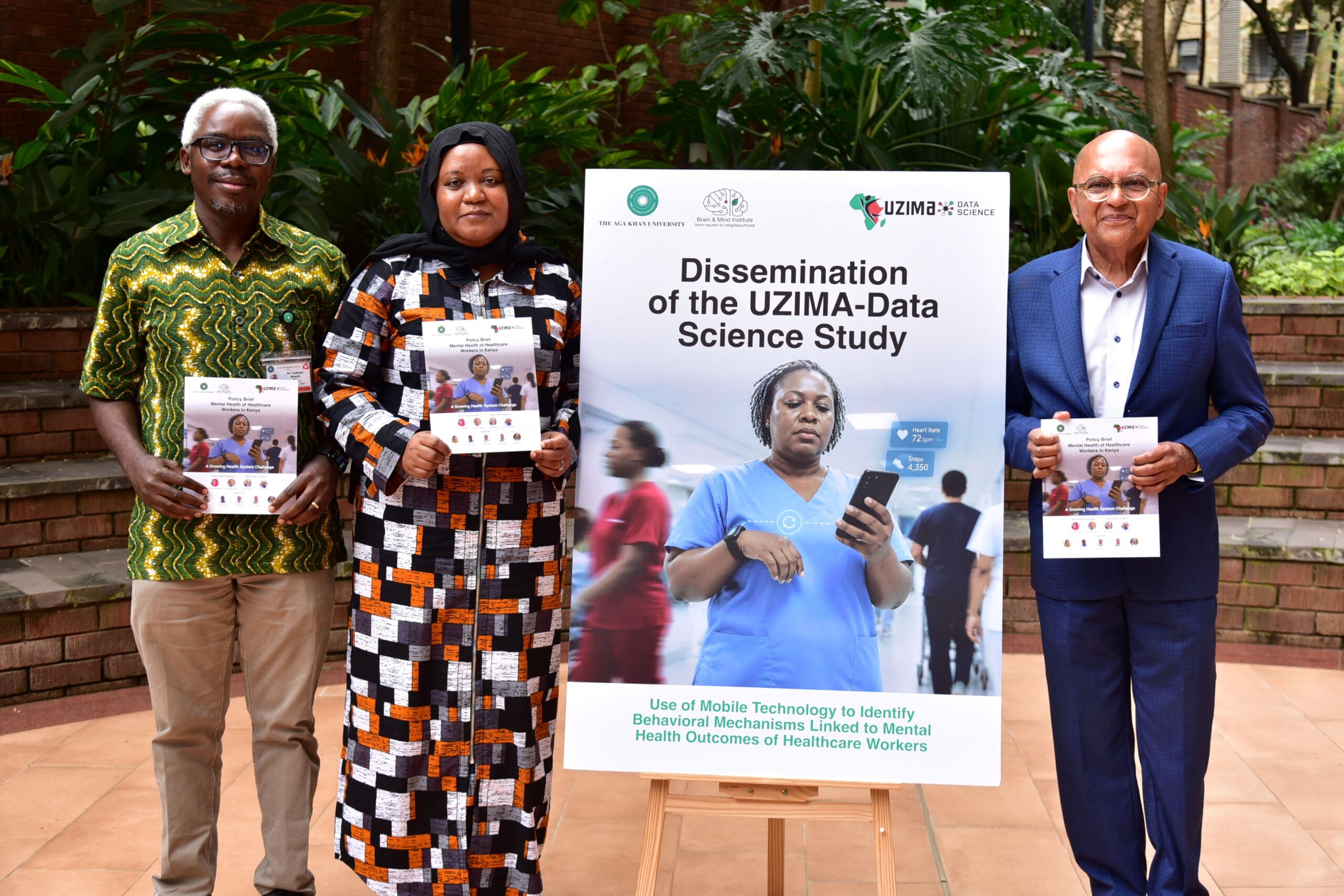
New findings from a study by the Aga Khan University Brain and Mind Institute (AKU-BMI) reveal 43.1 per cent of healthcare workers in Kenya report having depressive symptoms.
The study, dubbed the UZIMA Data Science (UZIMA DS), was conducted over 12 months period across five hospitals in Nairobi, drawing data from 514 healthcare workers.
The report examined depressive symptoms, workplace experiences, and the role of social and digital support systems in shaping mental health outcomes.
“This study highlights the reality of what healthcare workers are carrying every day. The findings give us a clear chance to take action and improve the systems that support our healthcare workers,” said Professor Zul Merali, Founding Director of the Brain and Mind Institute and Co-Principal Investigator of the UZIMA DS project.
The UZIMA DS Study points to the fact that mental health outcomes among healthcare workers are shaped not only by individual factors but also by systemic and structural conditions within health systems.
Workplace stress, organisational culture, and limited support structures all contribute to the overall burden, pointing to the need for comprehensive, system-wide responses.
The study provides clear evidence of substantial mental health challenges among healthcare workers in Kenya. 16.9 per cent reported moderately severe symptoms, with 5.5% experiencing severe symptoms. Key risk factors included workplace stress, discrimination, limited social support, and heightened vulnerability among younger and early-career staff.
At the policy level, the findings point to the need to better integrate mental health into workforce planning, occupational health systems, and broader health system strengthening efforts to ensure sustained support for healthcare workers.
Mary Karongo, Deputy Director of Counselling, Division of Mental Health at the Ministry of Health in Kenya, reaffirmed the government’s commitment to using evidence to inform policy and strengthen system-wide responses
“We recognise that supporting healthcare workers’ mental health is key to better care and stronger health systems. The Ministry is committed to integrating mental health into the workforce and occupational health strategies, “said Mary Karongo.
The study also identified promising opportunities for intervention. Healthcare workers expressed strong willingness to engage with digital mental health tools, including mobile applications and wearable technologies, creating pathways for early identification, monitoring, and timely support.
The findings underscored that the well-being of healthcare workers is foundational to the functioning of health systems. They also highlighted the urgent need for integrated, preventive, and sustainable approaches that place workforce wellbeing at the centre of health system strengthening.