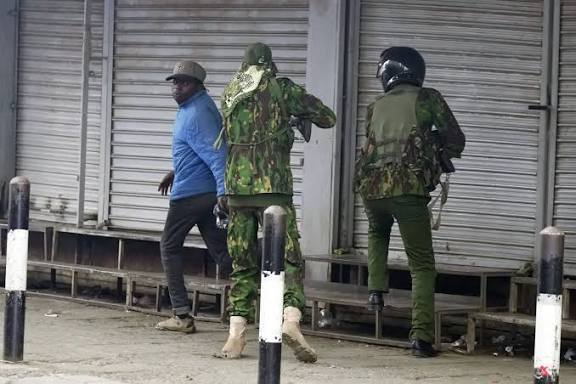
Klinzy Baraza denied bail after the High Court ruled against granting freedom to the police officer accused of fatally shooting mask vendor Boniface Kariuki in Nairobi’s Central Business District (CBD). The court cited serious concerns over witness safety, public interest, and the potential risk of interference with investigations in one of the country’s most closely watched police brutality cases.
The High Court’s decision means that Klinzy Baraza denied bail will remain in custody as legal proceedings continue. The ruling follows strong submissions by the prosecution, which argued that the nature of the case and the accused’s position as a serving law enforcement officer presented compelling reasons to keep him detained.
Court Emphasizes Public Interest and Witness Protection
In its ruling, the court stated that the circumstances surrounding the fatal shooting were unique, sensitive, and already widely publicized, placing the matter firmly in the public domain. The judge noted that the case has attracted intense national attention, increasing the likelihood of pressure, intimidation, or interference if the accused were released.
Prosecutors informed the court that the family of the deceased, Boniface Kariuki, has reportedly been subjected to harassment, including numerous unsolicited phone calls and messages. The court viewed these claims as a serious red flag, concluding that the safety and emotional well-being of the victim’s family could be compromised if bail were granted.
Details of the Nairobi CBD Shooting
Baraza is accused of shooting Boniface Kariuki on June 17, 2025, during an encounter with anti-riot police officers in Nairobi’s CBD. Kariuki, a hawker who earned his livelihood by selling face masks, was operating outside Imenti House when the incident occurred.
According to court records, Kariuki sustained a gunshot wound to the head and was rushed to hospital, where he later succumbed to his injuries. The shooting sparked public outrage, protests, and renewed scrutiny of police use of force, particularly against unarmed civilians working in public spaces.
Officer’s Position Considered a Risk
In explaining why Klinzy Baraza denied bail, the court highlighted the accused’s role as a police officer, noting that his professional authority, training, and access to institutional networks posed a real risk to the integrity of the case.
The judge agreed with the prosecution that releasing Baraza could increase the likelihood of witness intimidation or interference with ongoing investigations. The court emphasized that these concerns were not hypothetical but grounded in the realities of power dynamics within law enforcement structures.
Defense Plea Rejected
The defense urged the court to grant bail, arguing that Baraza had cooperated with investigators, was willing to comply with all court directives, and had family responsibilities, including young dependents who relied on him for care.
However, the court ruled that personal circumstances, while important, could not outweigh the broader interests of justice. The judge concluded that the risks identified by the prosecution — including threats to witnesses, public order, and confidence in the justice system — were compelling and justified continued detention.
Trial to Be Expedited
To prevent unnecessary delays, the court directed that the trial be fast-tracked. The matter has been scheduled for mention before the registry on February 17, 2026, as part of efforts to ensure timely resolution.
Until further orders, Klinzy Baraza denied bail will remain in custody as the prosecution prepares to present its case.
Wider Legal and Social Implications
Legal experts say the ruling sets an important precedent in cases involving alleged misconduct by state officers. It reinforces the principle that while bail is a constitutional right, it is not automatic and may be denied where compelling reasons exist.
Human rights organizations and civil society groups have welcomed the decision, viewing it as a step toward accountability and justice for victims of police violence. As the trial unfolds, the case is expected to remain under close public and legal scrutiny.