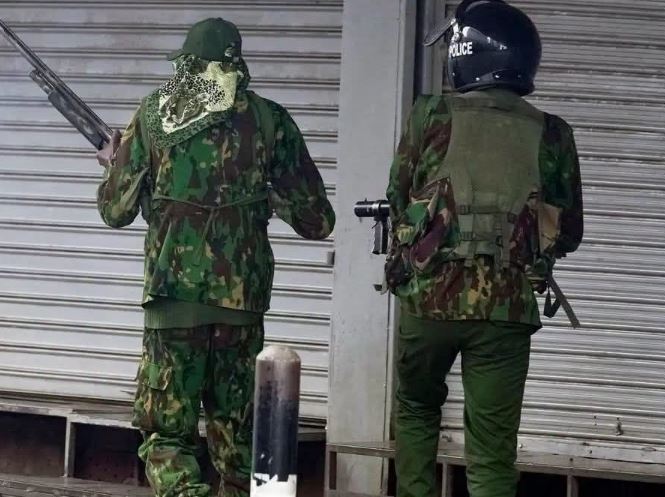
June 26, 2026 – A little-known piece of security equipment mounted on police armored vehicles has become one of the most talked-about technologies following the June 25 Gen Z commemoration protests in Nairobi.
Images and videos circulating online appeared to show armored personnel carriers (APCs) fitted with large rectangular speaker-like devices that observers and security experts identified as Long Range Acoustic Devices (LRADs) or similar directional acoustic systems.
The alleged deployment of the technology has sparked a nationwide debate about the use of advanced crowd-control equipment in Kenya and whether its appearance marks a dangerous new escalation in the policing of public demonstrations.
What Is an LRAD?
A Long Range Acoustic Device (LRAD) is a powerful directional loudspeaker system originally developed in the United States for military, maritime and security purposes.
Unlike conventional loudspeakers, LRADs project highly focused sound over long distances. The devices are used around the world to:
- Broadcast warnings and instructions to large crowds;
- Communicate during emergencies and evacuations;
- Warn approaching vessels at sea;
- Assist in border and security operations;
- Manage crowds during demonstrations and public events.
While manufacturers classify LRADs as communication and warning devices, their use in protest situations has become controversial because some models can emit extremely loud warning tones that can cause discomfort and disorientation.
The Controversial Warning Tone
One of the most debated features of an LRAD is its ability to emit a warning tone.
Unlike an ordinary siren, the warning tone is a highly focused, high-pitched and extremely loud sound designed to immediately capture attention and encourage people to move away from a particular area.
During Thursday’s demonstrations in Nairobi, several protesters and journalists reported hearing a tingling, piercing and shrill sound emanating from police vehicles.
People exposed to such tones have reported experiencing:
- Ringing or tingling in the ears;
- Temporary discomfort or pain;
- Headaches and dizziness;
- Difficulty hearing or concentrating;
- Disorientation and an urge to move away from the sound.
The actual effects depend on several factors, including the volume, distance from the device and the duration of exposure.
Why Its Use Is Being Viewed as a Dangerous New Escalation
The reported use of LRAD technology has raised concerns because it introduces a sophisticated crowd-control tool that many Kenyans have never before witnessed being deployed during demonstrations.
Critics argue that the use of acoustic devices represents a dangerous new escalation for several reasons.
Introduction of Military-Style Technology: LRADs were originally developed for military and maritime security operations before being adopted by law-enforcement agencies.
Potential Health Concerns: Human rights organisations and medical experts have raised questions about the impact of exposing people to extremely loud directional sounds.
Psychological Impact: The unfamiliar and piercing sound can cause confusion and panic among crowds that do not understand what the technology is or how it works.
Escalation of Crowd-Control Tactics: The deployment of advanced acoustic technology signals a significant shift in the methods available to security agencies during public-order operations.
Supporters of the technology, however, argue that LRADs can help authorities communicate warnings more effectively and may, in certain circumstances, reduce reliance on physical force.
Global Controversy Surrounding LRADs
The debate over use of LRAD in kenya is not unique worldwide.
In Serbia, allegations that sonic devices were used against anti-government protesters in 2025 sparked international concern and legal scrutiny. The European Court of Human Rights subsequently instructed Serbian authorities to prevent any future use of sonic devices for crowd-control purposes while investigations continue.
The Serbian case has become one of the most cited examples of the global debate surrounding the use of acoustic technology against civilian crowds.
Meanwhile, there is no widely documented or independently verified evidence that Egyptian authorities deployed LRAD systems during the 2011 Arab Spring protests, despite the extensive use of other crowd-control methods during those demonstrations.
The Armoured Vehicle
The armored vehicle seen in videos and photographs from Nairobi appears to be a Chinese-made or Chinese-derived armored personnel carrier, rather than an American vehicle.
Security analysts have pointed to similarities with Chinese police and paramilitary armored vehicles exported to several African countries. However, Kenyan authorities have not publicly identified the exact model of the vehicle or the equipment mounted on it.
What Laws Protect Kenyans?
Kenya currently has no specific law regulating LRADs or other acoustic crowd-control technologies.
However, several constitutional provisions may apply to their use:
- Article 29 guarantees freedom and security of the person and protection from cruel, inhuman or degrading treatment.
- Article 28 protects the right to human dignity.
- Article 37 guarantees the right to assemble, demonstrate and picket peacefully.
- The National Police Service Act requires that any use of force be lawful, necessary and proportionate.
The use of any new crowd-control technology would therefore remain subject to constitutional scrutiny and legal oversight.
A Changing Security Landscape Demands New Laws
The emergence of technologies such as LRADs, facial recognition systems, drones and other advanced security tools is rapidly changing the nature of policing around the world.
Yet Kenya’s laws have not evolved at the same pace.
The controversy surrounding the reported deployment of LRADs has exposed a growing legal gap. Human rights advocates and legal experts argue that Parliament should establish clear legislation and regulations governing the use of emerging security technologies.
Such laws would answer critical questions:
- Under what circumstances can these devices be used?
- What safety standards should apply?
- Who authorises their deployment?
- What oversight mechanisms exist if citizens believe the technology has been misused?
- What remedies are available if harm is caused?
As security technologies become more sophisticated, there is a growing argument that Kenya needs laws that both equip security agencies with modern tools and protect citizens from potential abuse.
The challenge for the country will be finding the right balance between national security and constitutional rights.
For many Kenyans, the June 25 protests were the first time they had heard of Long Range Acoustic Devices. The reports of a piercing and tingling sound emanating from police vehicles have now placed the technology at the centre of a wider national conversation about policing, accountability and the limits of state power during public demonstrations.
Whether the devices become a regular feature of crowd-control operations or prompt calls for stricter regulation, one thing is clear: the debate over LRADs has opened a new chapter in Kenya’s discussion about security, technology and civil liberties.