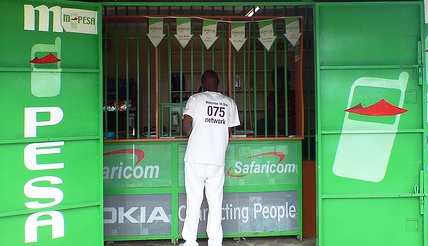
From digital lifeline to criminal frontier—the double-edged sword that transformed Kenya’s economy
Table of Contents
-
The Digital Revolution That Redefined Kenyan Commerce
-
By the Numbers: M-Pesa’s Staggering Economic Footprint
-
A Trader’s Lifeline: How Digital Credit Fuels the Informal Economy
-
The Dark Side of Digital Cash: A New Frontier for Crime
-
When Algorithms Decide: The Hidden Cost of Mobile Lending
-
The Fraud Epidemic: Scams That Drain Life Savings in Minutes
-
Law Enforcement’s Digital Dilemma
-
The Double-Edged Sword: Weighing Impact and Vulnerability
The Digital Revolution That Redefined Kenyan Commerce
Launched in 2007 by Safaricom, M-Pesa—a name combining “M” for mobile and “Pesa” (Swahili for money)—has evolved from a simple money transfer service into the very infrastructure of Kenya’s economy. What began as a solution for the unbanked has become a financial ecosystem that processes trillions of shillings annually, connecting urban workers to rural families, enabling small traders to scale their businesses, and fundamentally reshaping how Kenyans save, borrow, and spend.
The platform allows users to deposit, withdraw, transfer money, and pay for goods and services using their mobile devices—all without needing a traditional bank account. This innovation has integrated millions of informal workers into the formal monetary system, transforming basic mobile handsets into fully functional bank accounts.
By the Numbers: M-Pesa’s Staggering Economic Footprint
The scale of M-Pesa’s operations is nothing short of remarkable:
| Metric | Volume |
|---|---|
| Daily Transactions | Over 60 million |
| Daily Value Processed | Sh110 billion average |
| Per Second Processing | Over Sh1,300 |
| Daily Mobile Borrowing | Sh1.4 billion to Sh3.8 billion |
| Primary Source | Fuliza overdraft service |
Over the last decade alone, trillions of shillings in mobile loans have been poured directly into the hands of ordinary citizens and small traders. This has effectively replaced formal commercial banks as the primary source of immediate capital for Kenyans.
Key Services Offered by M-Pesa
-
Money Transfers: Send and receive funds instantly
-
Deposits & Withdrawals: Through a network of over 200,000 agents
-
Bill Payments: Utilities, schools, and government services
-
Merchant Payments: Pay for goods and services at thousands of outlets
-
Savings Products: M-Shwari and other micro-savings facilities
-
Credit Services: Fuliza overdraft and M-Pesa loans
-
International Remittances: Receive funds from abroad
A Trader’s Lifeline: How Digital Credit Fuels the Informal Economy
Along Oginga Odinga Street in Kisumu city, Millicent Anyango runs a wholesale fish distribution business supplying hospitality joints across the lakeside region. For her, M-Pesa is an absolute lifeline.
“The ability to access instant mobile loans through micro-savings facilities has completely eliminated the rigid bureaucratic hurdles of traditional banking halls.”
Anyango explains that for an independent trader, the capacity to pull an emergency micro-loan or use an automated overdraft facility to secure a fresh catch from the beaches of Dunga—even in the middle of the night—keeps her supply chain moving. Without this immediate access to digital credit, small-scale traders would remain at the mercy of predatory informal lenders who charge astronomical interest rates.
The platform has removed the physical friction of distances, allowing urban workers to remit money to rural relatives instantly. Businesses can now optimize their financial records through automated merchant tills, reducing internal leakages associated with employee theft and streamlining daily accounting transactions across multiple branches.
The Dark Side of Digital Cash: A New Frontier for Crime
Yet, this seamless migration away from physical cash has created an unintended paradox. As paper money vanishes from the streets, reducing traditional highway robberies, it has opened a highly sophisticated, invisible frontier for criminal syndicates.
The morning sun over the Kondele interchange in Kisumu illuminates a landscape defined by rapid commercial movement, where almost every exchange of goods is sealed by a mobile transaction tone. In Kisumu County, the digital wallet has evolved from a convenience into the very infrastructure of daily survival.
However, the same device that empowers a trader to scale up their business has become a conduit for digital exploitation, catching both local law enforcement and vulnerable residents in a complex web of modern fraud.
A senior police officer at Kondele Police Station, who declined to be named for protocol reasons, explains:
“Traditional physical muggings have dropped sharply because criminals know people no longer walk around with bulky wallets. Instead, criminals have re-tooled, moving their operations entirely into the digital space.”
The result? An influx of distraught victims reporting emptied mobile accounts every single week to police stations across the country.
When Algorithms Decide: The Hidden Cost of Mobile Lending
In the neighboring estate of Nyalenda, Peter Omondi, a local carpenter, speaks with bitter experience about the severe disadvantages of mobile lending.
“The ease of acquiring quick mobile loans often leads to a subtle form of financial bondage, where daily compounding interest fees quietly swallow up the thin profits of a workshop.”
The system, he notes, is entirely rigid, employing cold algorithms that automatically slash credit limits or trigger blacklists the moment a repayment deadline is missed due to a slow business season. This can permanently damage a worker’s long-term credit rating over minor balances.
The Digital Lending Trap
| Advantage | Disadvantage |
|---|---|
| Instant access to credit | High daily compounding interest |
| No collateral required | Algorithmic blacklisting |
| No paperwork or queues | Credit limits slashed for minor delays |
| Available 24/7 | Predatory for low-income earners |
For low-income earners, the steady shaving away of transaction, transfer, and withdrawal fees operates as a highly regressive financial burden. The total digitalization of cash means that when major network disruptions or server failures occur, the entire economy of a region like Kisumu can plunge into immediate paralysis.
The Fraud Epidemic: Scams That Drain Life Savings in Minutes
Peter Omondi’s financial struggles were pushed to a breaking point when he fell victim to a highly coordinated mobile money scam that cost him his entire life savings.
“I received a frantic call from an individual claiming to be an official customer care agent, speaking with authoritative clarity and utilizing an altered caller identity that mirrored the official corporate helpline.”
The caller claimed Omondi’s account was about to be permanently suspended due to an ongoing compliance audit and smoothly guided him through a series of phone commands under the pretense of updating his registration data.
Within three minutes of hanging up, Omondi watched in absolute horror as a succession of automated messages confirmed that Sh120,000—money he had painstakingly put aside to buy a high-grade timber sawing machine—had been systematically drained through unauthorized transfers and instant mobile loan drawdowns.
By the time he rushed to the nearest agent, the funds had been withdrawn at a distant terminal, leaving him with an empty wallet and a mountain of digital debt he did not spend.
Common M-Pesa Fraud Tactics
-
“Tuma kwa hii namba” (Send to this number) Scam
-
Fraudsters blast thousands of random text messages
-
Claims of failed transactions or urgent payment requests
-
Victims send cash to ghost accounts without verification
-
-
SIM-Swap Fraud
-
Criminals collude with compromised insiders
-
Victim’s phone card is replicated onto a blank chip
-
Network signal hijacked to intercept authorization pins
-
Accounts systematically cleared out
-
-
Impersonation Scams
-
Callers pose as official customer care agents
-
Use altered caller IDs mirroring corporate helplines
-
Guide victims through commands under false pretenses
-
-
Agent Targeting
-
Fraudsters present fraudulent identification documents
-
Use chemical sprays to disorient agents during transactions
-
Execute major deposits without paying cash equivalent
-
Law Enforcement’s Digital Dilemma
According to the senior police officer, the tactics used by modern syndicates rely heavily on psychological manipulation rather than technical hacking. The station frequently receives complaints regarding organized syndicates operating both locally and from notorious correctional facilities in the country.
Combating Digital Crime
To combat this rising tide of cyber-enabled theft, the police have implemented several measures:
-
Corporate Partnerships: Collaboration with corporate security teams and mobile network providers
-
Signal Tracing: Tracing signal towers and blocking flagged lines
-
Plainclothes Operations: Deployment of intelligence officers across major mobile money hot spots
-
Community Sensitization: Grassroots barazas to enlighten residents, particularly elderly traders, on protecting their personal identification numbers and data
The Double-Edged Sword: Weighing Impact and Vulnerability
The Revolutionary Advantages
M-Pesa’s core advantages centre on its revolutionary impact on financial inclusion and economic velocity:
✅ Financial Inclusion: Integrated millions of informal workers into the formal monetary system
✅ Reduced Costs: Dramatically lowered transaction costs compared to earlier transfer systems
✅ Distance Removal: Allows urban workers to remit money to rural folks instantly
✅ Business Efficiency: Automated merchant tills reduce internal leakages
✅ Credit Access: Provides immediate capital for small-scale traders
✅ Security: Reduced physical cash carrying lowers robbery risks
The Significant Vulnerabilities
❌ Digital Dependency: Total reliance on network availability; economy paralyzed during disruptions
❌ Regressive Fees: Transaction and withdrawal fees burden low-income earners
❌ Digital Illiteracy: Elderly and rural populations vulnerable to exploitation
❌ Fraud Epidemic: Sophisticated scams drain life savings in minutes
❌ Debt Trap: Algorithmic lending with compounding interest can create financial bondage
❌ Limited Recourse: Difficulty recovering funds once fraudulently transferred
Securing the Digital Frontier

As M-Pesa continues to evolve, the challenge of securing Kenya’s digital economy grows more urgent. The platform’s success has made it a prime target for criminals, and the pace of technological advancement often outstrips the capacity of law enforcement and public awareness.
A senior police officer noted that the tactics used by modern syndicates rely heavily on psychological manipulation rather than technical hacking. The solution requires a multi-pronged approach:
-
Enhanced Digital Literacy: Comprehensive education campaigns targeting vulnerable populations
-
Stronger Regulation: Stricter oversight of mobile lending practices and fraud prevention
-
Improved Recovery Mechanisms: Systems to trace and recover fraudulently transferred funds
-
Telecom Collaboration: Stronger partnerships between mobile operators and law enforcement
-
Consumer Protection: Better safeguards for victims of digital crime
A Tool of Empowerment, A Weapon of Exploitation
M-Pesa has fundamentally transformed Kenya’s economic landscape. It has empowered millions, reduced poverty, and positioned Kenya as a global leader in mobile financial technology. The platform has integrated millions of informal workers into the formal monetary system, removed physical friction from commerce, and dramatically lowered transaction costs.
However, this total reliance, paired with a general lack of digital literacy among the elderly and rural populations, has ultimately transformed a brilliant tool of economic empowerment into a vulnerable frontier. A lifetime of hard work can be “taken away” by a voice on the other end of a phone line.
The system, for all its benefits, remains entirely rigid—employing cold algorithms that automatically slash credit limits or trigger blacklists the moment a repayment deadline is missed. While law enforcement battles the digital criminal wave, the tangible benefits of the platform continue to drive the legitimate economy forward.
The challenge for Kenya is clear: how to preserve and enhance the revolutionary benefits of M-Pesa while protecting citizens from the sophisticated exploitation that now accompanies it. The answer lies in a combination of technology, regulation, education, and community vigilance.