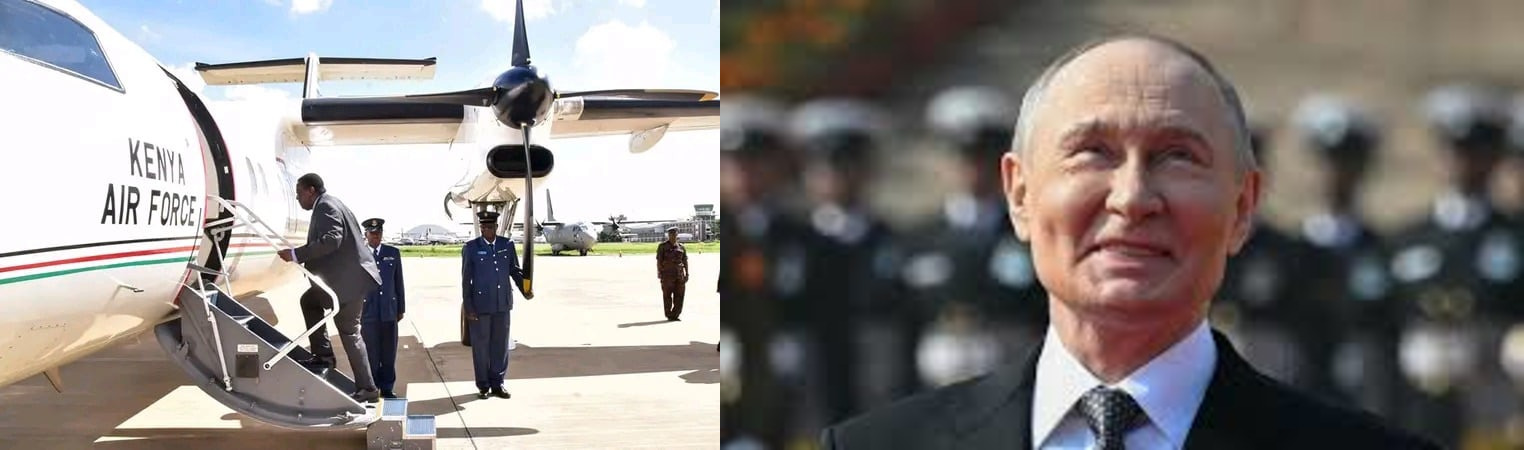
MOSCOW, Russia — Prime Cabinet Secretary and Cabinet Secretary for Foreign and Diaspora Affairs, Musalia Mudavadi, arrived in the Russian capital on Sunday, March 15, 2026, for a high-stakes diplomatic mission. While the visit aims to strengthen bilateral ties, the primary driver is a burgeoning humanitarian and security crisis involving Kenyan nationals allegedly caught in the crosshairs of the Russia-Ukraine conflict.
The Moscow visit comes amid mounting pressure on the Kenyan government to address reports of “clandestine” recruitment networks. These syndicates have reportedly funneled hundreds of Kenyans into the Russian military under the guise of civilian job offers, a situation the Prime CS aims to resolve through direct state-to-state dialogue.
A Humanitarian Crisis at the Forefront
The centerpiece of the Mudavadi agenda is a bilateral meeting with Russian Foreign Minister Sergey Lavrov scheduled for Monday. According to a recent report by Kenya’s National Intelligence Service (NIS), approximately 1,000 Kenyans may have been recruited through unregulated channels over the past year.
Official data shared by the Ministry of Foreign Affairs paints a sobering picture of the situation:
-
252 nationals have been officially identified as active in combat zones.
-
10 Kenyans are currently reported as missing or killed in action.
-
38 individuals are currently hospitalized in Russia with restricted access to their families or Kenyan consular officials.
“Our primary objective is the safety and dignity of our citizens,” a senior official traveling with the delegation stated. “During this Mudavadi in Moscow mission, we are seeking a transparent, formal framework to dismantle these rogue recruitment pipelines and ensure the safe repatriation of those who wish to return home.”
Balancing Geopolitics and Trade
While the security crisis dominates the headlines, the Mudavadi Moscow visit is also a delicate balancing act for Nairobi. Kenya remains a key strategic partner for Western nations, yet it is increasingly looking to Moscow to diversify its economic interests in an unpredictable global market.
Beyond the security talks, the Prime CS is scheduled to meet with the Russian Ministers of Education and Labor. Key economic areas of discussion include:
-
Labor Mobility: Establishing legal, state-vetted avenues for Kenyan workers in Russia to prevent future human trafficking and exploitation by private military contractors.
-
Agricultural Support: Securing continued shipments of Russian fertilizer, which remain a critical component of President William Ruto’s plan to lower food production costs in Kenya.
-
Trade Expansion: Opening Russian markets to Kenyan coffee, tea, and floriculture, which have faced logistical hurdles due to ongoing tensions in the Middle East and the Red Sea.
Strengthening Educational and Technical Ties
The Mudavadi Moscow visit will also touch upon long-standing educational cooperation. Russia has historically provided thousands of scholarships to Kenyan students in fields like medicine, nuclear science, and engineering. Mudavadi aims to expand these slots while ensuring that students are strictly protected from military conscription or coerced recruitment. This is a vital step in reassuring Kenyan parents whose children are currently pursuing higher education within the Russian Federation.
The Road Ahead for Kenya-Russia Relations
This mission is seen as a definitive test of Kenya’s “Non-Aligned” foreign policy. By engaging directly with the Kremlin, Nairobi is attempting to protect its nationals without alienating its traditional allies in Washington or London.
Following his high-level meetings, Mudavadi is expected to deliver a public lecture at the Moscow State Institute of International Relations (MGIMO), where he will likely touch upon Kenya’s role in global peace and regional stability.
The success of the Moscow trip will ultimately be measured by the safe return of Kenyan citizens and the formalization of labor agreements that prevent further “mercenary” recruitment. For the families of those missing abroad, this visit represents the first real glimmer of hope for a safe homecoming.nis