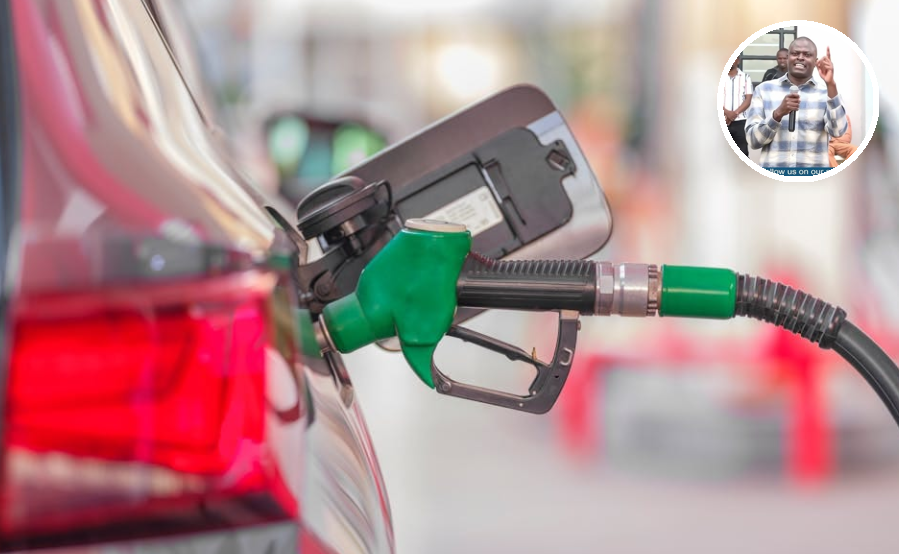
As the Energy and Petroleum Regulatory Authority (EPRA) prepares to announce the new monthly fuel price cycle on Saturday, March 14, 2026, Kiharu MP Ndindi Nyoro has issued a stern warning against any potential fuel price hike. The outspoken legislator has positioned himself at the forefront of the national debate, arguing that any upward adjustment in pump prices at this juncture is fundamentally unjustifiable and an unsustainable burden on struggling Kenyan households.
The Core Argument: Past Costs vs. Speculative Volatility
At the center of Nyoro’s opposition is a technical disagreement regarding the timing of petroleum imports. He contends that the fuel stock currently held within the country—which will be dispensed throughout the upcoming March–April cycle—was procured and imported before the recent spikes in global oil prices.
Recent geopolitical tensions, particularly the escalating conflict involving Iran and disruptions in the Middle East, have rattled global energy markets, driving crude oil prices toward levels not seen since 2022. However, Nyoro maintains that these international fluctuations should not be used as a “convenient excuse” to inflate local pump prices.
“All the oil in Kenya, all the reserves, were imported before the instability in the Middle East,” Nyoro stated during a recent public engagement. “The prices Kenyans pay now are based on past costs. You have no right to increase fuel prices even by one shilling.”
Calls for Structural Tax Reform
Beyond opposing the immediate fuel price hike, Nyoro is calling for a structural overhaul of how the government handles fuel taxation. He argues that the cumulative tax burden has created a “new normal” that is unsustainable for the average citizen. Specifically, he is advocating for “desperate measures” to provide economic relief, which include:
-
Removing the 8% VAT on petroleum products.
-
Scrapping the KSh 7 per litre fuel levy introduced in 2024.
Nyoro claims that while the government was quick to impose these taxes, it has failed to provide a corresponding reduction in prices when global oil markets trended downward in previous months. This, he argues, suggests that the government prioritizes tax collection over the economic welfare of the populace.
The Context of the EPRA Review
The upcoming announcement follows the February 14, 2026, review, which provided modest relief to motorists. In that cycle, the price of Super Petrol was reduced by KSh 4.24, Diesel by KSh 3.93, and Kerosene by KSh 1.00 per litre. As of today, the retail prices in Nairobi stand at KSh 178.28 for Super Petrol, KSh 166.54 for Diesel, and KSh 152.78 for Kerosene.
EPRA, as the regulator, faces a complex balancing act. Its mandate, as stipulated under the Petroleum Act 2019, is to cap retail prices to ensure that importers recover “prudently incurred costs” while protecting consumers from price gouging. However, with global oil prices recently surging on international exchanges due to the conflict in the Strait of Hormuz, the regulator must decide whether to pass these new, higher landed costs to the consumer or find alternative mechanisms to mitigate the impact.
Political and Economic Ramifications
Nyoro’s vocal stance has significant political weight. Once a central figure within the ruling administration’s budget-making team, his transition to a critic of these fiscal policies indicates growing tensions regarding the government’s approach to the cost-of-living crisis. Observers are keenly watching the Saturday announcement, as any increase would likely ignite further public debate and potentially lead to organized opposition from transport sectors and consumer groups.
The government maintains that its pricing formulae are based on objective, data-driven factors, including international market benchmarks and exchange rate fluctuations. Nevertheless, the pressure on EPRA to account for the “past-cost” inventory remains the defining issue of this month’s review.
A Bellwether for Economic Policy
Ultimately, the decision made this weekend will serve as a bellwether for the administration’s ability to manage public expectations amidst volatile international headwinds. Whether this period of volatility leads to a structural overhaul or a temporary tightening of belts remains the defining question of the first quarter of 2026. The public will be watching closely to see if the regulator prioritizes the math of global markets or the immediate needs of a population already reeling from economic pressure.
Avoiding a fuel price hike is currently the primary demand of the citizenry, and how EPRA responds will set the tone for the political discourse in the coming weeks.