Oburu to Kindiki Dialogue: ODM Says We Want Talks, Not Your Position
Oburu to Kindiki dialogue has become the center of political debate after Orange Democratic Movement (ODM) leader Oburu Odinga clarified that his party is not interested in taking over the Deputy President’s seat but is instead focused on meaningful political negotiations with the ruling United Democratic Alliance (UDA).
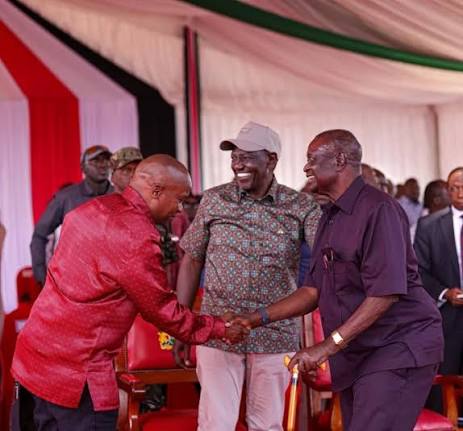
Speaking during the National Youth Opportunities Towards Advancement (NYOTA) business support programme held in Kisumu on Monday, Oburu addressed Deputy President Kithure Kindiki directly, assuring him that ODM’s participation in the broad-based leadership talks is not aimed at removing him from office.
“Mr Deputy President, do not think we want your seat and chase you. You are our friend, but as we negotiate, we will do so according to what our people and party deserve,” Oburu said while drawing applause from attendees.
Oburu to Kindiki Dialogue Sparks Political Debate in Kisumu
The Oburu to Kindiki dialogue unfolded in the presence of President William Ruto, senior government officials, and ODM leaders, signaling a possible shift toward cooperation between traditionally rival political camps.
Oburu emphasized that ODM’s priority is to secure better opportunities and development outcomes for Kenyans rather than engage in power struggles. He noted that the talks with UDA would focus on improving economic inclusion, youth empowerment, and equitable distribution of national resources.
“We are going to talk to UDA and make sure we have more than we have now,” Oburu stated, hinting at negotiations aimed at increasing ODM’s influence in government decision-making.
The Siaya Senator further stressed that ODM is a national party that represents all Kenyans regardless of tribe or region. He dismissed claims that the party was driven by ethnic politics, stating that fairness and unity remain at the core of ODM’s agenda.
“Our party is not a Luo party. It is a party for the whole country. We will negotiate fairly and ensure that everyone gets a fair share of the national cake,” he added.
What Oburu to Kindiki Dialogue Means for ODM and UDA Talks
Political analysts say the Oburu to Kindiki dialogue could reshape Kenya’s political landscape ahead of the 2027 General Election. ODM’s willingness to engage with UDA is being viewed as a strategic move to increase political leverage while maintaining relevance in national governance.
The talks are expected to cover power-sharing arrangements, development projects, and political cooperation frameworks that could benefit both parties. ODM leaders believe that working with the government will give the party greater continuity and stability heading into the next election cycle.
However, the move has not been welcomed by everyone within ODM. Some younger party leaders and grassroots supporters have criticized the broad-based government approach, arguing that ODM risks losing its identity as a strong opposition party.
Despite the criticism, party leadership remains firm that dialogue is the best path forward in the current political environment.
ODM Chairperson Gladys Wanga echoed Oburu’s sentiments, saying the party expects fair allocation of national resources and meaningful inclusion in development planning as negotiations progress.
Oburu to Kindiki Dialogue and the Road to 2027 Elections
President William Ruto has also made his intentions clear regarding the 2027 elections. He recently stated that he is targeting a decisive victory with a margin of between two and three million votes, possibly through a coalition with ODM and other political partners.
The Oburu to Kindiki dialogue is therefore seen as part of broader coalition-building efforts that could shape future political alliances. Observers believe that cooperation between ODM and UDA could significantly alter voting patterns across several regions.
At the same time, Kenyans are watching closely to see whether these talks will translate into real policy changes, economic reforms, and improved service delivery.
Many citizens remain hopeful that dialogue between political rivals will reduce political tension and promote national unity, especially at a time when economic challenges continue to affect households across the country.
Public Reaction and Political Implications
Public reaction to the Oburu to Kindiki dialogue has been mixed. Supporters argue that cooperation is necessary to stabilize the political environment and drive development, while critics fear that political bargaining could weaken accountability and opposition oversight.
Still, analysts agree that open dialogue remains a critical step toward reducing political hostility and building long-term partnerships.
As the Oburu to Kindiki dialogue continues, both ODM and UDA face pressure to ensure transparency and fairness in negotiations while delivering tangible benefits to citizens.
With the 2027 elections approaching, the outcome of these talks could play a major role in shaping Kenya’s political future.