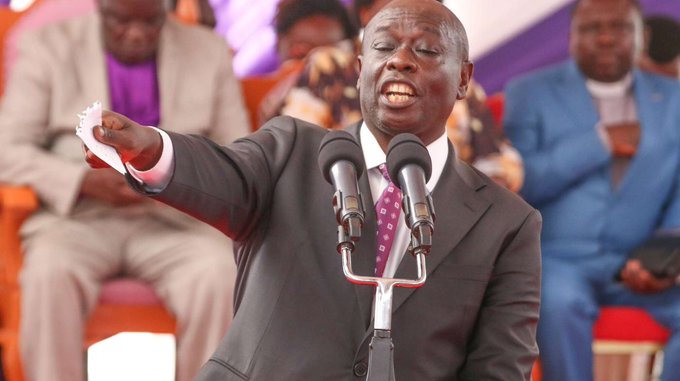
Rigathi Gachagua impeachment case is set for a major legal turning point today as the Supreme Court prepares to issue a decisive ruling on the constitutionality of the High Court bench that handled challenges to his removal from office.
The four-judge bench of the Supreme Court is expected to determine whether the High Court panel appointed by Deputy Chief Justice Philomena Mwilu acted within constitutional limits when it cleared the way for Gachagua’s impeachment in October 2024. The ruling is anticipated to have wide-reaching implications for Kenya’s political and judicial landscape.
According to the Judiciary of Kenya, the Supreme Court serves as the country’s highest court with exclusive authority over presidential and major constitutional disputes. More information on the court’s mandate is available at https://www.judiciary.go.ke.
Supreme Court to Review High Court Bench Legality
At the centre of the case is the legality of the three-judge High Court bench composed of Justices Eric Ogola, Anthony Mrima and Freda Mugambi. The Supreme Court will assess whether DCJ Mwilu had the constitutional authority to empanel the judges during the absence of Chief Justice Martha Koome.
In October 2024, the High Court panel lifted conservatory orders that had temporarily halted impeachment proceedings against Gachagua. This move allowed Parliament to proceed with the process, leading to his removal from office and the subsequent appointment of Kithure Kindiki as Deputy President by President William Ruto.
Kenya’s impeachment process is outlined under the Constitution, which can be accessed through Parliament’s official platform at https://www.parliament.go.ke/the-constitution-of-kenya.
What Is at Stake in the Rigathi Gachagua Impeachment Case?
The Supreme Court ruling in the Rigathi Gachagua impeachment case could determine whether earlier High Court decisions remain valid or are nullified.
If the apex court upholds the High Court bench, the matter is likely to be referred back to the same judges to handle substantive constitutional questions. These include the extent of judicial oversight over parliamentary impeachment procedures and the balance of power between the judiciary and the legislature.
However, if the Supreme Court finds the bench was improperly constituted, previous rulings could be overturned. Such a decision may trigger fresh legal proceedings and reshape how future impeachment disputes are handled in Kenya.
A related development is President William Ruto’s appointment of Kithure Kindiki as Deputy President following Gachagua’s removal. Full details can be found at https://dailyexpress.co.ke/ruto-appoints-kithure-kindiki-deputy-president.
Background of Gachagua’s Removal
Rigathi Gachagua was impeached by the National Assembly and later removed by the Senate in late 2024 after lawmakers accused him of gross constitutional violations, abuse of office and misconduct.
The impeachment process generated intense political debate nationwide, particularly in the Mt Kenya region where Gachagua maintains strong grassroots support. Political leaders and analysts have described the process as one of the most significant constitutional events in Kenya’s recent history.
Reactions from Mt Kenya leaders following the impeachment are available here: https://dailyexpress.co.ke/mt-kenya-leaders-react-gachagua-impeachment.
Legal Team Raises Due Process Concerns
Gachagua’s legal team has consistently argued that the impeachment proceedings violated due process and fair administrative action principles. They claim that procedural irregularities in the formation of the High Court bench compromised judicial independence and fairness.
The lawyers further argue that constitutional safeguards were ignored during both the parliamentary and judicial phases of the impeachment process.
Guidelines governing judicial conduct and appointments are published by the Judicial Service Commission at https://www.jsc.go.ke.
Wider Implications for Kenya’s Judiciary and Politics
Legal experts say the outcome of the Rigathi Gachagua impeachment case could set important precedents on how politically sensitive cases involving senior public officials are handled.
The ruling is expected to influence the relationship between Parliament and the judiciary, especially in matters related to impeachment and constitutional oversight.
Observers also believe the decision could affect political alignments ahead of future elections, particularly in regions where Gachagua remains politically influential.
As Kenyans await the Supreme Court verdict, calls have been made for calm and respect for the rule of law, regardless of the outcome.