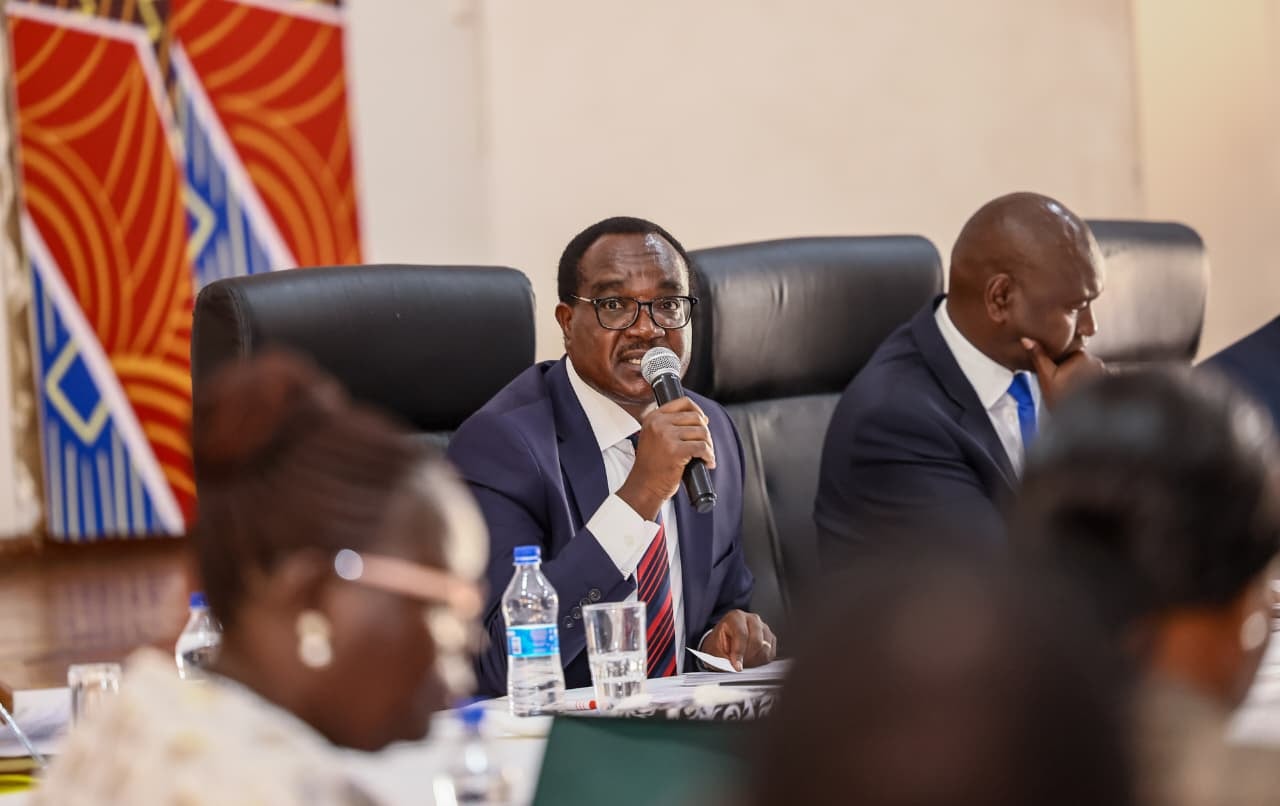
The Ministry of Education has uncovered widespread discrepancies in learner enrolment figures across the country, prompting investigations and disciplinary action against teachers and education officials implicated in the irregularities.
Education Cabinet Secretary Julius Ogamba directed authorities to act after findings from the nationwide School Data Verification exercise revealed significant differences between data in the National Education Management Information System (NEMIS) and figures physically verified at school level. He instructed the Teachers Service Commission and the Directorate of Criminal Investigations to take immediate action against individuals suspected of inflating enrolment data or failing in their supervisory duties.
A report released on Thursday, February 12, revealed that primary schools had 5,833,175 learners recorded in NEMIS, but only 4,947,271 were verified on the ground, producing a negative variance of 885,904 learners. Secondary schools also recorded discrepancies, with 3,352,884 learners captured in NEMIS compared to 3,265,154 learners confirmed during verification, a difference of 87,730.
Interestingly, in junior secondary schools, verified figures were higher than the system recorded. While NEMIS showed 2,430,398 learners, physical verification confirmed 2,973,648 learners, creating a variance of 543,250. These findings indicate both underreporting and overreporting issues across different education levels.
The exercise also uncovered numerous unauthenticated learner records, including missing or invalid Unique Personal Identifiers (UPIs), duplicated or incorrect assessment numbers, and mismatched examination centre codes. Such discrepancies raise serious concerns about the integrity of learner data used for resource allocation, planning, and policymaking.
Further investigations revealed that 10 secondary schools and 17 primary schools listed in official records were non-operational due to insecurity, relocation of communities, lack of learners, or administrative closure, yet had not been formally reported to the ministry. Additionally, 102 junior schools and 84 primary schools were operating below the stipulated minimum enrolment threshold, indicating gaps in compliance with national education standards.
Weak oversight mechanisms at the sub-county level were also highlighted, with some discrepancies left unreported or not corrected in time, pointing to systemic lapses in supervision and accountability.
Following the audit, the report has been forwarded to the Teachers Service Commission for action against 14 heads of institutions who failed or refused to submit data for verification, and 20 others accused of submitting inflated enrolment figures. Administrative action is also being taken against 28 sub-county directors of education and quality assurance and standards officers in areas where systemic failures and supervisory lapses were identified.
The findings have also been submitted to the Directorate of Criminal Investigations to probe possible cases of misconduct and falsification of official education data. All unverified learners have been suspended from government capitation and resource allocation pending proper authentication, while non-operational schools identified during the exercise will undergo formal closure or deregistration in line with ministry regulations.
The Ministry of Education further announced that learner data will now undergo verification every school term, alongside a fast-tracked transition from NEMIS to the upgraded Kenya Education Management Information System (KEMIS). Officials said the enhanced verification process will strengthen accuracy, transparency, and accountability in education records, ensuring that public funds are allocated to schools based on credible learner numbers.
Education authorities emphasized that the School Data Verification exercise is now a permanent accountability measure. Termly audits will help curb data manipulation, improve oversight at all levels, and ensure resources reach schools and learners that genuinely require support. The exercise is also expected to restore confidence in the country’s education statistics, enabling more effective planning, teacher deployment, infrastructure development, and policy formulation.
By combining termly verifications with the upgraded KEMIS system, the Ministry of Education aims to eliminate discrepancies, improve reporting standards, and safeguard taxpayer funds while ensuring that learners benefit from a more transparent and efficient education system.