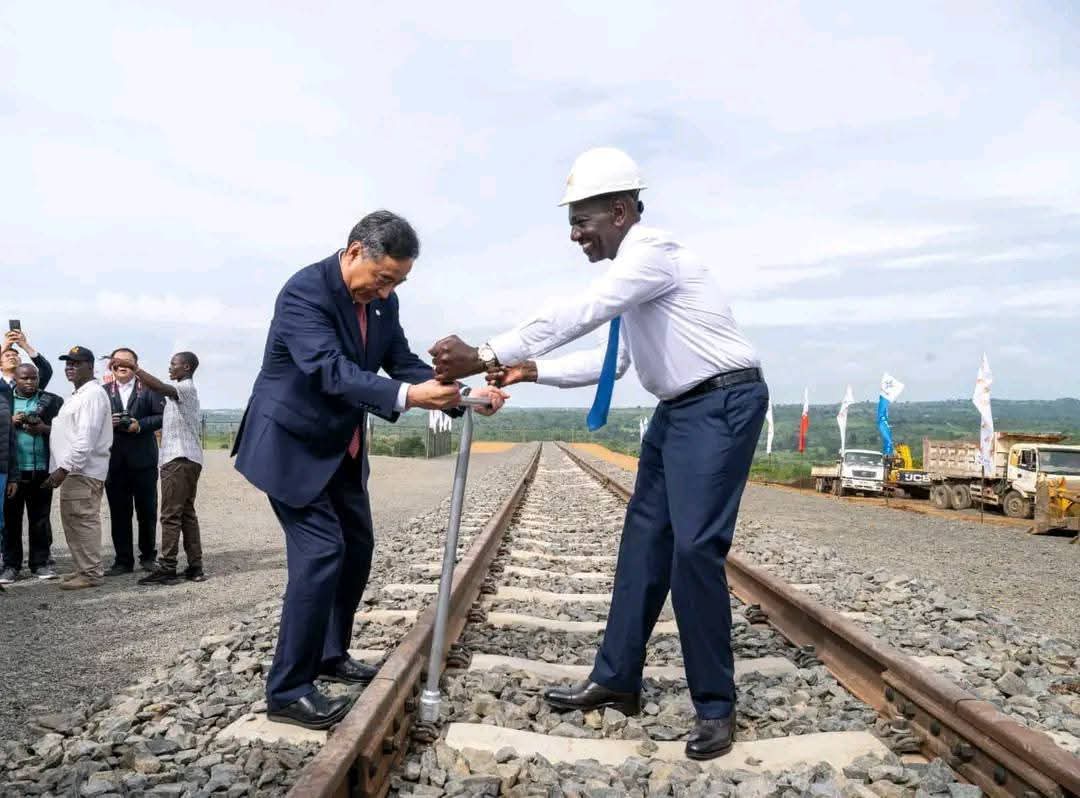
Construction of the Standard Gauge Railway (SGR) Phase 2B has officially been launched, marking a major milestone in Kenya’s infrastructure development.
William Ruto presided over the groundbreaking of the project, which will run from Naivasha to Kisumu, as part of the government’s broader plan to expand the country’s transport network.
The launch signals a significant step forward in Kenya’s long-term transport expansion strategy, aimed at improving connectivity between key economic regions and strengthening the country’s logistics network.
Speaking during the ceremony, the Head of State said the project will play a critical role in boosting trade, easing the movement of goods, and lowering transportation costs for businesses across the country. He noted that extending the railway to western Kenya will unlock economic potential in the region while enhancing access to the port of Mombasa through the existing SGR line.
The Naivasha–Kisumu section, also known as Phase 2B, is expected to link the inland container depot in Naivasha to Kisumu, a key lakeside city and regional trade hub along Lake Victoria. The government projects that the line will improve cargo efficiency and support industries such as agriculture, manufacturing, and fishing.
In addition, the government has announced that Phase 2C of the SGR project will be launched on Saturday in Kisumu. This phase will extend the railway further from Kisumu to Malaba, a strategic border point with Uganda.
The Kisumu–Malaba extension is expected to strengthen regional integration by enhancing cross-border trade within the East African Community. It will also position Kenya as a critical transit corridor for goods destined for landlocked countries in the region, including Uganda, Rwanda, and South Sudan.
The SGR expansion has, however, continued to attract mixed reactions, with supporters citing its potential to transform the economy, while critics raise concerns over the project’s cost, financing model, and long-term sustainability.
Despite these concerns, the government maintains that the railway remains a cornerstone project under its infrastructure agenda, aimed at driving economic growth and regional competitiveness.
Construction timelines and financing details for both Phase 2B and 2C are expected to be outlined in the coming days as the government moves to fast-track implementation.