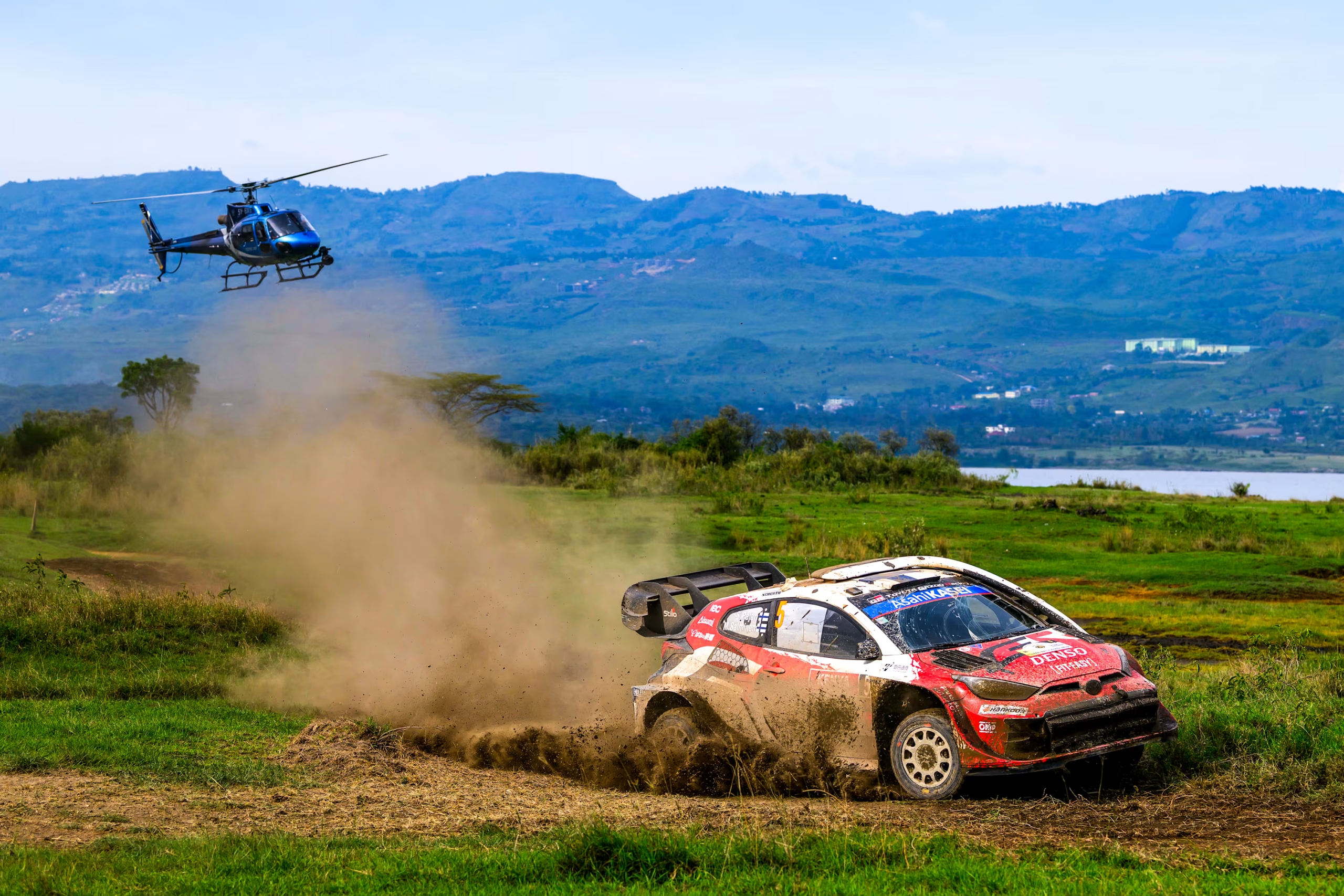
The WRC Safari Rally 2026 concluded in Naivasha today, Sunday, March 15, with a mix of high-octane celebration and a transformative policy shift that will redefine the future of motorsport in Kenya. While Toyota Gazoo Racing’s Takamoto Katsuta celebrated a career-defining maiden victory, President William Ruto sent shockwaves through the sporting world by announcing that the government would officially withdraw all public funding for the event starting next year.
The four-day event, known as the most grueling leg of the World Rally Championship, lived up to its reputation for “brutal” conditions, with torrential rains and rocky terrain forcing several top-tier drivers into retirement before the final power stage at Hell’s Gate.
Katsuta Makes History at Hell’s Gate
The headline of the WRC Safari Rally 2026 is undoubtedly the emotional triumph of Takamoto Katsuta. Navigated by Aaron Johnston, Katsuta finished 27.4 seconds ahead of Hyundai’s Adrien Fourmaux to secure his first-ever WRC win in his 94th start.
Katsuta’s victory is historically significant, as he becomes only the second Japanese driver to win at the top level of rallying, following Kenjiro Shinozuka’s 1992 success. “I don’t know what to say,” an emotional Katsuta said at the finish line. “We had so many difficult moments, and the team always believed in me when I was failing. To finally win here, at the Safari, means everything.”
Toyota’s dominance was further cemented by Sami Pajari, who claimed third place, while championship leader Elfyn Evans and teammate Oliver Solberg were forced to settle for lower positions after a disastrous Saturday morning that saw three Toyota cars suffer mechanical failures.
Karan Patel Leads the Kenyan Charge
In the local standings, two-time African Rally Champion Karan Patel proved once again why he is the king of the continent. Navigating a Škoda Fabia Rally2, Patel finished 17th overall, the highest rank among Kenyan drivers.
Patel’s performance was a masterclass in endurance, outlasting more powerful machines that fell victim to the “Sleeping Warrior” stage. His result also secures him the top spot in the opening leg of the 2026 African Rally Championship (ARC) campaign. Other notable Kenyan finishers included Aakif Virani (18th) and Samman Vohra (19th), while Nikhil Sachania took a remarkable second place in the WRC3 category.
Ruto Announces Exit from Public Funding
The most significant development for the future of theSafari Rally 2026 came during the podium ceremony at the Wildlife Research and Training Institute (WRTI). President William Ruto announced that this would be the final year the Kenyan taxpayer would foot the bill for the rally.
“This is the last Safari Rally where we will be spending public money to promote,” the President stated. “From 2027, this event will be fully funded and supported by the private sector.”
Ruto’s directive marks a shift toward complete privatization, handing over the responsibility for hosting, managing, and financing the event to corporate partners such as KCB Bank, Safaricom, and Kenya Airways. The President noted that this move would allow the government to redirect billions of shillings toward grassroots sports in schools and national infrastructure development.
The Legacy of the 2026 Edition
Despite the looming funding changes, the WRC Safari Rally 2026 was a massive commercial success for Nakuru County. Tourism CS Rebecca Miano reported 100% hotel occupancy in Naivasha and its environs, driven by thousands of local and international fans.
As the dust settles on the Rift Valley, the focus now shifts to whether the private sector can sustain the high costs of a WRC event. With discussions currently underway for a five-year contract extension with the FIA, the 2026 edition may go down in history as the end of an era and the beginning of a new, commercially-driven chapter for the world’s toughest rally.