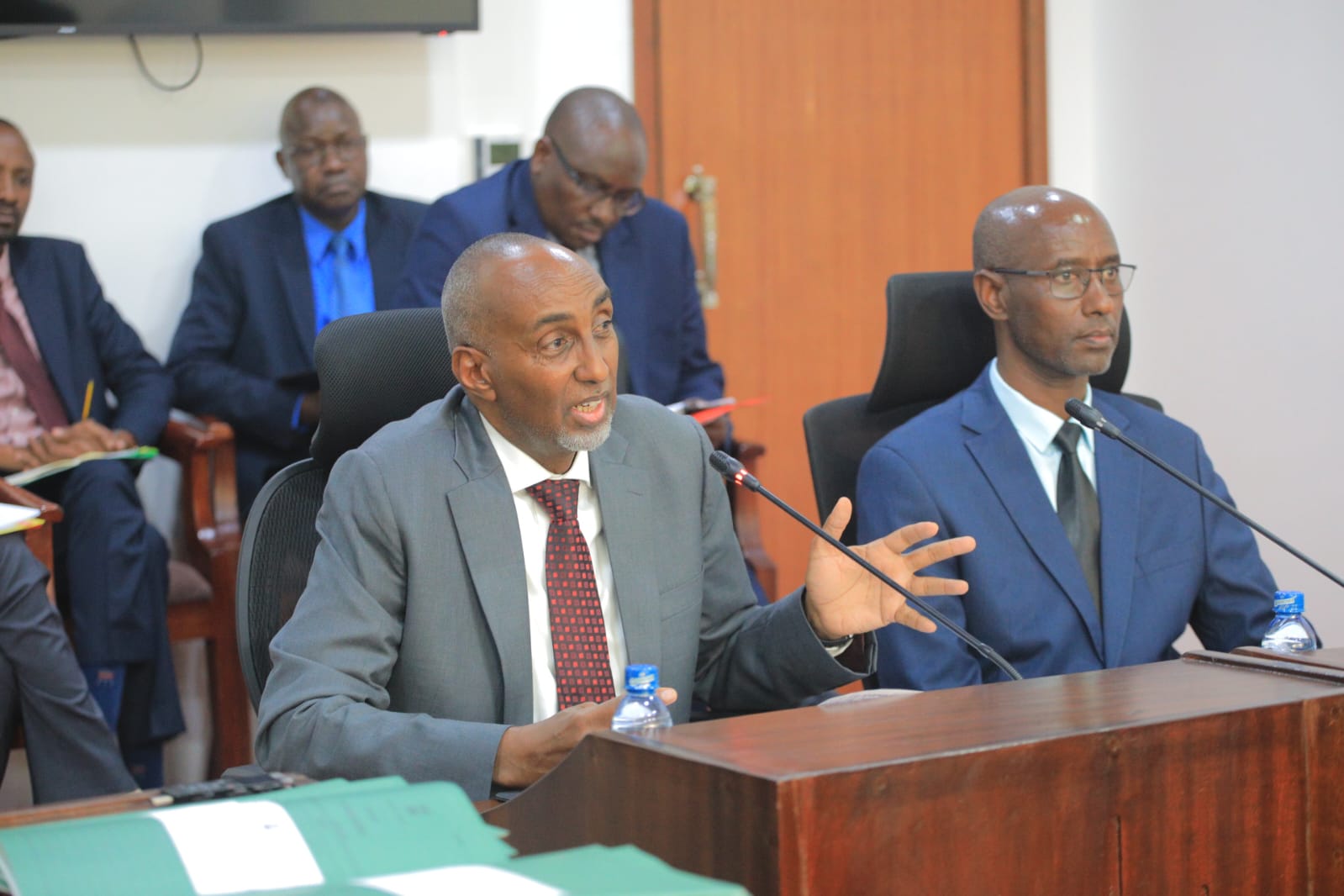
The Ethics and Anti-Corruption Commission (EACC) has called for constitutional and legal reforms to strengthen integrity requirements for candidates seeking elective office ahead of the 2027 General Election.
Appearing before the National Assembly’s Constitutional Implementation Oversight Committee, EACC Chief Executive Officer Abdi Mohamud proposed amendments to key constitutional provisions that the Commission says currently hinder the effective enforcement of integrity standards for electoral candidates.
During his submission, Mohamud focused on the implementation of Chapter Six of the Constitution on leadership and integrity and its relationship with provisions on representation of the people under Chapter Seven. The discussions form part of early electoral preparedness as institutions begin aligning legal frameworks ahead of the 2027 polls.
The Commission proposed amendments to Article 99(3) and Article 193(3) of the Constitution, which determine eligibility for election to Parliament and county assemblies. According to EACC, the two provisions create a significant loophole by allowing individuals convicted of corruption or abuse of office to remain eligible to contest elections as long as they have filed an appeal.
“Article 99(3) and Article 193(3) of the Constitution pose a major obstacle to enforcing ethical, moral, and integrity standards for candidates in elections. They make a person not to be disqualified from contesting an election by virtue of having been convicted or found, in accordance with any law, to have misused or abused a State or public office, or to have contravened Chapter Six, unless all avenues of appeal or review have been exhausted,” Mohamud told the committee.
The Commission noted that the current framework allows individuals found to have violated the Constitution or other laws to continue seeking elective office while appeals remain pending, sometimes for extended periods. In some cases, the same individuals are able to retain public office during the appeal process.
To address the loophole, EACC is proposing amendments that would keep such individuals disqualified from contesting elections until their conviction, sentence, or decision is successfully overturned on appeal or review.
Mohamud argued that while the presumption of innocence applies until a person is found guilty, once a conviction has been reached, the responsibility should shift to the affected individual to overturn the ruling on appeal before being cleared to vie for public office.
The Commission also raised concerns that some individuals exploit the current provisions by filing appeals that remain pending for years, effectively circumventing the constitutional integrity requirements.
Mohamud told the committee that the issue has previously been raised in national reform processes, including the Building Bridges Initiative and the National Dialogue Committee, as well as before several parliamentary committees, but no comprehensive reforms have been implemented.
Beyond constitutional changes, the Commission also proposed amendments to Section 13(2) of the Leadership and Integrity Act to clarify the role of EACC in vetting candidates seeking elective office.
According to the Commission, the Act does not clearly outline the responsibilities of the Independent Electoral and Boundaries Commission in handling self-declaration forms submitted by candidates or how EACC should conduct integrity verification under its oversight mandate.
EACC is recommending the introduction of statutory timelines for integrity verification as well as the creation of a formal institutional framework that allows agencies holding relevant information about candidates to share data efficiently.
The Commission believes such reforms would strengthen coordination between institutions and ensure timely sharing of integrity-related information with the electoral body during candidate clearance and registration.
Mohamud further urged stakeholders involved in protecting the credibility of elections to enhance cooperation and align their strategies early in preparation for the 2027 General Election, noting that safeguarding integrity remains central to public trust in Kenya’s democratic processes.