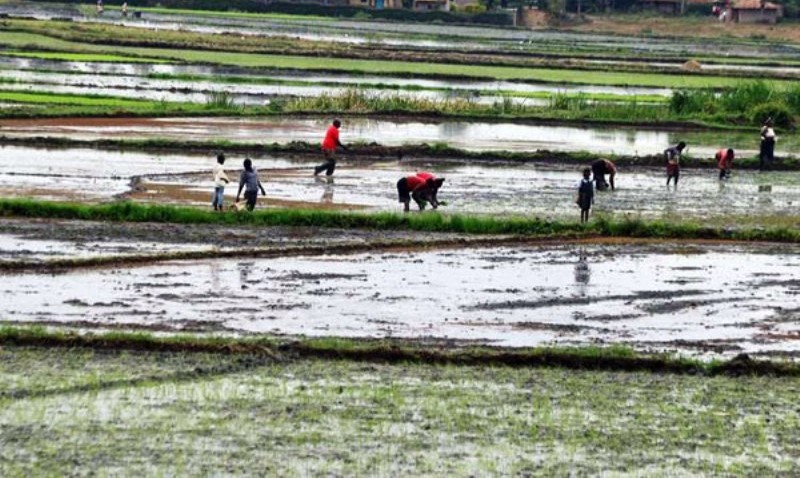
In Kenya’s Tana River Basin, the solution to a climate challenge did not emerge from a laboratory or a government office. It came from the farmers themselves.
Table of Contents
-
When Farmers Know Best: The Tana River Story
-
The WATDEV Initiative: Sh1.1 Billion Bet on Climate Resilience
-
From Conflict to Cooperation: Easing Tensions Between Farmers and Pastoralists
-
The Conference: 70 Experts, One Urgent Mission
-
Technology Alone Cannot Save Africa’s Agriculture
-
The Way Forward: Scaling What Already Works
When Farmers Know Best: The Tana River Story
When irrigation planners proposed planting large windbreak trees around rice fields in Hola and Bura, local farmers raised an unexpected concern.
The trees, they warned, would attract birds that would feast on their rice crops, potentially turning a well-intentioned conservation project into a costly mistake.
Rather than dismissing the concerns, project designers listened. The irrigation plans were redesigned to include fruit trees around homesteads and dedicated fodder-growing zones within irrigation schemes.
The changes not only protected rice production but also created new sources of income, improved livestock feeding during droughts, and reduced long-standing conflicts between crop farmers and pastoralists competing for scarce resources.
This is a simple example of how local knowledge can transform agricultural development — and one that has become increasingly important as Africa grapples with the twin challenges of climate change and food insecurity.
The WATDEV Initiative: Sh1.1 Billion Bet on Climate Resilience
Across the continent, rising temperatures, erratic rainfall, prolonged droughts, and land degradation are threatening food production, placing millions of smallholder farmers under growing pressure.
Experts now argue that future solutions will depend not only on scientific innovation but also on recognizing farmers as equal partners in designing climate-resilient agricultural systems.
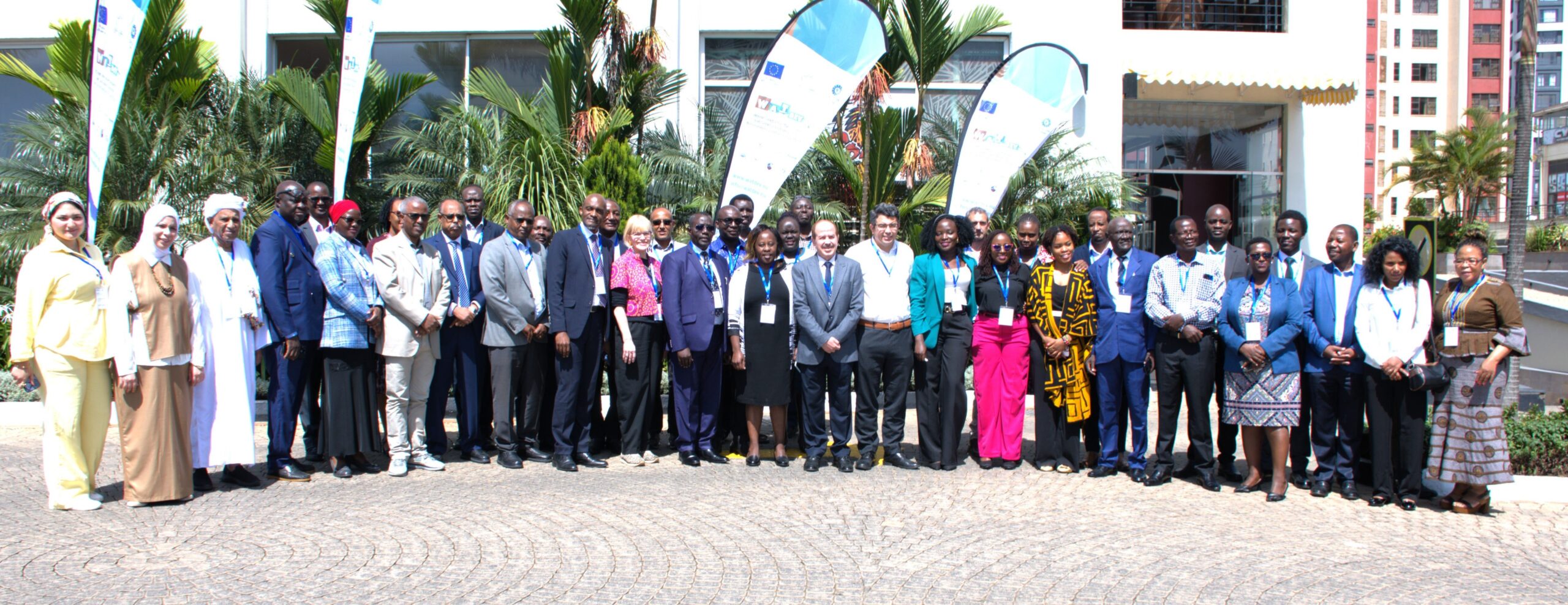
That message dominated discussions during the two-day international conference on Integrating Grassroots Knowledge and Research into Water and Soil Management in Africa, held in Nairobi last month.
The meeting brought together more than 70 researchers, policymakers, development partners, and agricultural experts from across Africa and Europe to examine how the continent can build resilient food systems.
The conference marked the conclusion of the four-year WATDEV (Climate Smart Water Management and Sustainable Development for Food and Agriculture in East Africa) initiative under the European Union’s DeSIRA programme.
With funding of Sh1.1 billion (€7.5 million) , the project has worked across Kenya, Ethiopia, Sudan, and Egypt to strengthen climate resilience through better water management, sustainable land use, and improved agricultural practices.
From Conflict to Cooperation: Easing Tensions Between Farmers and Pastoralists
For many participants, the Tana River experience illustrated why development programmes succeed when communities are involved from the beginning.
Laura Dema, Tana River County’s Energy Officer, explained that after farmers rejected the original windbreak proposal, the project adopted a more practical approach by promoting agroforestry around homesteads with fruit trees such as mangoes, papayas, and coconuts, while establishing dedicated fodder production areas within irrigation schemes.
The results extended well beyond agriculture. The additional fodder ensured livestock had feed during prolonged dry spells, generated extra household income, and eased historical tensions between sedentary farmers and migrating pastoralists over grazing land.
| Challenge | Solution | Outcome |
|---|---|---|
| Windbreak trees attracting birds to rice fields | Fruit trees around homesteads | Protected rice production + new income sources |
| Livestock feed shortages during droughts | Dedicated fodder zones within irrigation schemes | Improved livestock feeding during dry spells |
| Conflict between farmers and pastoralists | Shared water and grazing resources | Reduced tensions and improved cooperation |
Dema also noted that the project strengthened existing Water Users Associations instead of creating new administrative structures, improving water allocation, governance, and cooperation among communities.
“When you use water effectively, the cost of energy that you put into pumping water is going to pay back what you produce.”
— Laura Dema, Tana River County Energy Officer
She underscored the close relationship between efficient water management, energy use, and farm productivity.
The Conference: 70 Experts, One Urgent Mission
The Nairobi conference brought together more than 70 researchers, policymakers, development partners, and agricultural experts from across Africa and Europe.
The experience reflects a broader shift in thinking among agricultural scientists, who increasingly advocate integrated farming systems that treat water, soil, forests, crops, and livestock as interconnected rather than separate sectors.
Speakers at the conference warned that fragmented approaches to managing natural resources are becoming unsustainable as climate change intensifies while demand for food continues to rise.
They argued that agricultural policies must be informed by evidence gathered directly from farming communities, cautioning that valuable partnerships often disappear once donor-funded projects come to an end.
Christophe Larose of the European Union said WATDEV had successfully brought together institutions that rarely work closely with one another, including government ministries, universities, researchers, farmers, and development partners, creating a shared platform for exchanging knowledge across the four participating countries.
The project also unveiled a climate-smart decision-making toolbox that enables farmers, particularly those in arid and semi-arid areas, to choose technologies best suited to their local conditions.
The options range from planting basins and small-scale irrigation systems to intercropping and other water-efficient farming practices.
Technology Alone Cannot Save Africa’s Agriculture
However, participants stressed that technology alone cannot solve Africa’s agricultural challenges.
Claudio Bogliotti, Head of the EU Research and Innovation Policies Unit at CIHEAM-Bari, said digital modeling and forecasting tools only become valuable when combined with farmers’ lived experiences.
Farmers, he said, must be active participants in shaping land and water management decisions rather than passive recipients of new technologies.
His colleague, Dr. Gaetano Ladisa, warned that the greatest test will come after the project ends. Sustaining innovation, he noted, requires more than technology — it also depends on training, financing, and long-term political commitment.
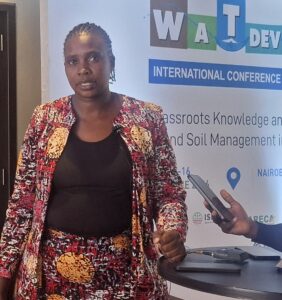
“Technology and innovation are important, but they must be affordable, adaptable, and relevant to local conditions if they are to make a meaningful difference at the farm level.”
— Dr. Hellen Sang, Kenyan Soil and Water Engineering Expert
The Business Case for Agricultural Innovation
Others pointed to another persistent obstacle: moving scientific research beyond pilot projects.
Prof. Jean Jacques Mbonigaba Muhinda, Regional Head at AGRA, said many promising innovations fail because researchers struggle to demonstrate a convincing business case capable of attracting investment and institutional support.
“The only way we can drive lasting agricultural innovation to the last mile is by developing a solid business case for its delivery.”
— Prof. Jean Jacques Mbonigaba Muhinda, AGRA
He urged stronger alignment with continental programmes such as Comprehensive Africa Agriculture Development Programme ex-Pillar 4 (CAADP-XP4) , a European Union and IFAD-funded initiative.
ASARECA Executive Director Dr. Sylvester Dickson Baguma echoed those concerns, arguing that Africa already possesses much of the knowledge and natural resources needed to transform agriculture but continues to struggle with translating research into large-scale implementation.
“Africa already possesses much of the knowledge and natural resources needed to transform agriculture, but continues to struggle with translating research into large-scale implementation.”
— Dr. Sylvester Dickson Baguma, ASARECA Executive Director
The Way Forward: Scaling What Already Works
As WATDEV draws to a close, its partners believe they have laid the groundwork for a new approach to climate-smart agriculture — one built on collaboration between scientists and farmers rather than one replacing the other.
The challenge now is ensuring that the networks, technologies, and knowledge developed over the past four years continue to grow after project funding ends.
If the discussions in Nairobi offered one clear lesson, it was this:
Africa’s agricultural future will depend not on the absence of solutions, but on the willingness to scale those that already work.
And in places like Tana River, where farmers helped redesign an irrigation project into a model of resilience, the blueprint for that future may already be taking shape.
Key Takeaways
| Lesson | Implication |
|---|---|
| Farmers must be partners, not recipients | Local knowledge is essential for climate resilience |
| Integrated approaches work | Water, soil, crops, and livestock are interconnected |
| Technology needs context | Tools must be affordable and adaptable to local conditions |
| Sustainability requires commitment | Training, financing, and political support are essential |
| A business case is critical | Innovations must attract investment and institutional support |