OPINION: As Bafana Bafana makes history on the pitch, the stench of xenophobia threatens to undo the promise of the Rainbow Nation
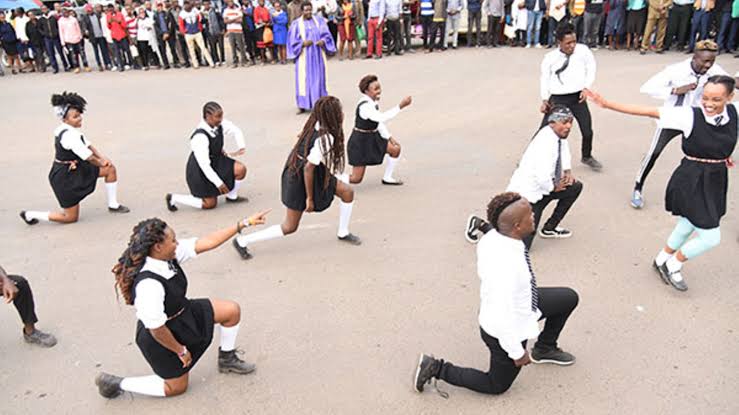
My introduction to South Africa came through a film that broke me. Sarafina — that 1992 musical about the Soweto Uprising — was the first movie I ever cried watching. I remember the exact moment: Sarafina’s boyfriend, shot dead in the street, still in his school uniform. The pain of it wasn’t distant. It was in my skin. I understood, perhaps for the first time, that the scales do not balance — not for people who look like me, not for children whose only crime was wanting to learn.
That film was my first encounter with a nation forged in fire, a country that had bled for its freedom. So when I look at South Africa today — at the vigilantes, the ultimatums, the stench of xenophobia rising — I feel not just anger, but an ache of betrayal. How does a nation that bore the weight of apartheid, that taught the world what ubuntu means, turn around and visit the same cruelty on its neighbours?
The Ultimatum: A Nation Holds Its Breath
As June 30, 2026 approaches, South Africa is a powder keg. Anti-immigration groups — primarily the March and March movement and Operation Dudula — have set an unofficial deadline for all undocumented foreigners to leave the country. The demand has no legal force; the government has rejected it as unlawful and unenforceable. President Cyril Ramaphosa has condemned vigilantism, insisting that immigration enforcement remains the sole responsibility of the state.
“Every person within our borders must be here lawfully,” Ramaphosa told the National Council of Provinces. “But the so-called June 30, in my view, is not an event that is even necessary.”
Yet the government’s words, however firm, have failed to calm the rising tide of fear. Thousands of foreigners have already fled, with makeshift camps mushrooming in Durban and Johannesburg as migrants await transport to home countries. At least three people have been killed in xenophobic violence this year; Mozambican authorities put the toll among their nationals at five. In 2025 alone, 151 xenophobic incidents were recorded; in the first five months of 2026, another 22 verified incidents. Of those 22, 14 were violent attacks.
Bafana Bafana’s Glory and Africa’s Betrayal

This is the bitter irony that haunts the moment. Even as the stench of xenophobia rises, Bafana Bafana has made history — reaching the Round of 32 of the FIFA World Cup for the first time. South Africa and Côte d’Ivoire were the first African teams to confirm knockout qualification. On Sunday, they face Canada in Los Angeles.
Africa should be celebrating. Instead, the continent watches with a mixture of pride and profound disillusionment. Here is the nation that bears Africa’s second name — South Africa — turning its back on fellow Africans. The African Commission on Human and Peoples’ Rights has expressed “grave alarm” over the threats of expulsion, condemning acts of intimidation and violence directed against migrants from other African states. The Commission reminds South Africa that these acts violate the African Charter’s principles of non-discrimination, the right to life, dignity, and security of the person. Article 12 of the Charter explicitly prohibits mass expulsion of non-nationals.
Nigeria, Ethiopia, Malawi, Mozambique — the list of countries issuing alerts to their citizens grows. Nigerian airline Air Peace has once again stepped in to repatriate citizens. One flight from Johannesburg carried 258 returnees. These are the faces of a humanitarian crisis unfolding in plain sight.
The Paradox of a Nation Born of Resistance
How did we get here? The roots of South Africa’s xenophobia are tangled in the legacies of apartheid. Scholars argue that post-apartheid nationalism, with its state prescriptions founded on indigeneity, has allowed xenophobic discourse to dominate uncontested. The racism that once justified the oppression of Black South Africans has been redirected — turned outward, toward fellow Africans from Zimbabwe, Nigeria, Ghana, Malawi, Mozambique.
It is a form of black-on-black racism, a tragic reenactment of the colonial dehumanization that South Africans themselves once suffered. The immigrants are surviving in what one scholar calls a “post-apartheid-apartheid” South Africa.
The irony is devastating. A nation that knows the weight of oppression, that has the scars of apartheid etched into its collective memory, is now imposing a similar hierarchy of worth on its neighbours.
The Numbers Tell a Story of Desperation
South Africa’s unemployment rate hovers around 32 percent. Competition for scarce work has fuelled resentment, and migrants are scapegoated for poverty and crime. But the data tells a more complex story. Researchers from Wits University warn that the government’s actions have emboldened vigilante groups, with “community development” associations running protection rackets that determine who can live, build, or conduct business in their neighbourhoods — often in collaboration with local police.
The past is a warning: 62 people were killed in the 2008 xenophobic riots. Violence in 2019 saw armed mobs descend on foreign-owned businesses around Johannesburg, leaving at least 12 dead.
And yet, the narrative persists that South Africans are inherently xenophobic. Ramaphosa himself pushed back: “I’m a strong believer that South Africans are peaceful people. They are not xenophobic, they are not afrophobic”. The researchers counter that the state’s actions — meeting with vigilante leaders, broadcasting their words on national television — serve to embolden these groups.
Where Is the Sanity?
Could some sanity vibrate back, like the Jabulani ball that we learned to love? The famous World Cup ball of 2010 was unpredictable, difficult to control — but over time, players learned its rhythm. They adapted. South Africa, too, must learn to adapt — to find a path that balances legitimate concerns about immigration with the fundamental humanity of those seeking a better life.
Bishop Mbuyisa of the South African Catholic Bishops’ Conference appealed for calm: “As the 30 June 2026 deadline for all undocumented foreigners to leave South Africa approaches, we appeal for calm and urge all those involved in anti-migration protests to refrain from violence against foreign nationals and to respect and uphold the rule of law.”
Business Unity South Africa warned that instability could damage investor confidence and slow economic recovery. Major labor federations — COSATU, FEDUSA, SAFTU, NACTU — have distanced themselves from the anti-migrant actions.
But appeals are not enough. The African Commission has called on South Africa to establish robust protection measures, dismantle vigilante groups, ensure accountability, and strengthen oversight. These are not optional. They are obligations under the African Charter.
A Continent’s Hope, a Nation’s Responsibility
South Africa’s stock on the continent is priceless — but it is sinking to painful-to-watch levels. The nation that gave the world Nelson Mandela, that showed us the power of forgiveness and reconciliation, is now a cautionary tale.
Bafana Bafana’s World Cup run is a reminder of what South Africa can achieve when it unites. But you cannot cheer for the team while turning your back on the continent it represents. You cannot claim the glory of Africa while rejecting its people.
The scales do not balance. They never have. But South Africa knows this better than most. It has the scars to prove it. The question is whether those scars will remind the nation of its wounds — or whether it will inflict new ones on others.
As the 30th of June dawns, I will be watching. Not just for the violence that might come, but for the sanity that might, against all odds, prevail. For the memory of Sarafina. For the promise of a nation that once taught the world that oppression ends when we remember our shared humanity.
South Africa, you are better than this. Act like it.
The writer is a commentator on African affairs and a journalist with extensive experience covering the continent’s political and social developments.
Factual scaffolding:
-
June 30 deadline set by March and March and Operation Dudula
-
Government rejects deadline as unlawful and unenforceable
-
At least 3 killed in 2026 xenophobic violence; 5 according to Mozambique
-
151 xenophobic incidents in 2025; 22 in first five months of 2026
-
62 killed in 2008 riots; 12 in 2019
-
Unemployment rate ~32 percent
-
African Commission condemns threats, cites violations of African Charter
-
Bafana Bafana reaches World Cup Round of 32 for first time
-
Nigeria repatriates 258 citizens via Air Peace
-
27 civil organisations behind June 30 protests
-
R600m police operation deployed across all nine provinces
-
Fake Department of Home Affairs notice went viral