Women’s rights organisations and feminist movements across Africa have raised alarm over growing political backlash, shrinking civic space, online violence, and weak justice systems, warning that the challenges are undermining efforts to combat gender-based violence (GBV) and secure justice for survivors.
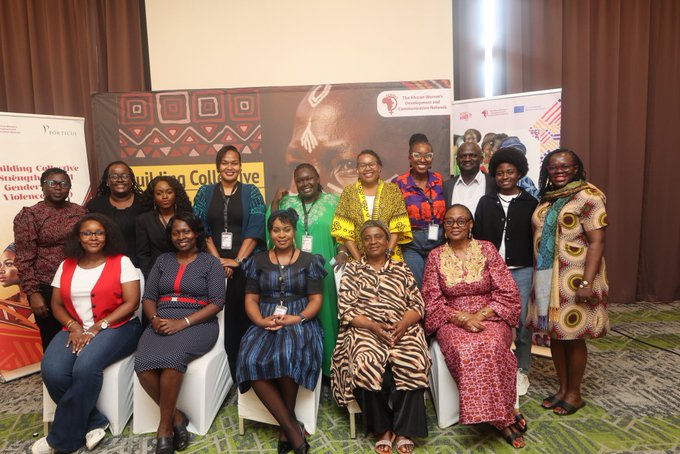
The concerns were raised during a four-day meeting bringing together African feminists, women’s rights organisations, advocates, and movement builders supported by Porticus and FEMNET to discuss strategies for ending GBV and rising femicide cases across the continent.
The groups noted that despite many African countries having laws against GBV, survivors continue to face delayed justice, limited access to legal aid, weak accountability systems, and poor implementation of protective laws.
“Feminist legal advocacy is not just about law reform; it is about changing how law is enforced, interpreted, and experienced by survivors,” they said, adding that laws alone are not enough without implementation, accountability, and justice systems that truly protect survivors across Africa.
Activists further warned that civic restrictions and digital harms are increasingly silencing women’s voices and exposing activists, journalists, and survivors to online harassment and intimidation.
Read Also: Justice Njoki Ndung’u ICC Nomination: A New Chapter for Kenyan Global Jurisprudence
Chemical Castration in Kenya: Inside the Proposed Punishment for Sex Offenders and the Legal Dilemmas
Recent findings by UN Women showed that women in public spaces are facing growing levels of online abuse, including cyberstalking, deepfakes, image-based sexual abuse, and online threats, pushing many out of leadership and advocacy spaces.
The organisations said changing public narratives around GBV is also critical in dismantling violence against women and girls.
According to the groups, advocacy language should not only focus on policy change but also on reshaping societal attitudes and building “narrative power” that centres survivors and challenges harmful gender norms.
In her opening remarks, FEMMNET Executive Director Memory Kachambwa called for urgent continental action to address the escalating cases of femicide in Africa.
”Femicide is rising across our continent, yet African women’s voices continue to be excluded from decision-making spaces on issues affecting them. We must build an African agenda fuelled by feminist fire, one that confronts backlash, challenges harmful systems, and uses every tool available to combat GBV,” she stated.
The convention by the groups comes as recent global and regional reports paint a grim picture of violence against women across Africa. According to UN Women and the United Nations Office on Drugs and Crime (UNODC), about 50,000 women and girls were killed by intimate partners or family members in 2024, translating to one woman being killed every 10 minutes globally.
Africa recorded the highest rate of femicide by intimate partners or family members at three deaths per 100,000 women and girls.
The reports further indicate that conflict, economic instability, climate shocks, and weak justice systems continue to expose women and girls to sexual and gender-based violence across many African countries. In some regions, support systems remain critically overstretched, with reports showing only one social worker available for every 70 survivors.
In Kenya, the debate around GBV and femicide has intensified following the rising cases reported in recent years. UN Women noted that Kenya’s National Gender-Based Violence Working Group has been pushing for reforms aimed at strengthening prevention measures, improving survivor protection, and enhancing accountability in femicide cases.
Women’s rights groups now say that without stronger political commitment, adequate funding, and survivor-centred justice systems, efforts to curb GBV and femicide across Africa will remain insufficient.