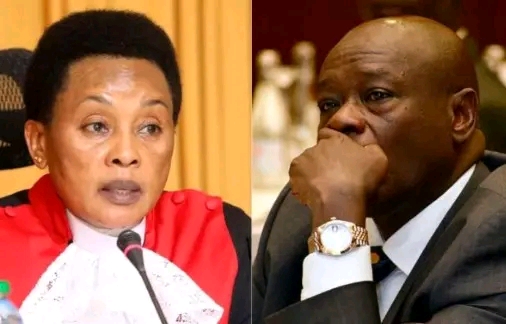
The Rigathi Gachagua impeachment case has reached a major legal milestone after the Supreme Court dismissed consolidated applications from both the former Deputy President and the National Assembly. The ruling paves the way for the substantive appeal on the legality of the High Court bench that handled his impeachment to proceed.
In its Friday decision, the apex court rejected all applications with no orders as to costs, ensuring that the substantive legal questions surrounding Deputy Chief Justice Philomena Mwilu’s empanelment of High Court judges are now fully addressed.
Background of the Rigathi Gachagua Impeachment Case
The dispute began in October 2024, when the National Assembly impeached Rigathi Gachagua. Following his removal, several petitions were filed in various High Courts challenging different aspects of the parliamentary process. Given the constitutional importance, the Chief Justice was called to empanel special benches to hear the petitions.
On October 14, 2024, Chief Justice Martha Koome empanelled a three-judge High Court bench comprising Justices Eric Ogola, Anthony Mrima, and Frida Mugambi to hear the first cluster of petitions. As more petitions were filed — including attempts to block Senate proceedings and the swearing-in of Prof. Kithure Kindiki as Deputy President — Deputy Chief Justice Philomena Mwilu empanelled the same bench in the Chief Justice’s absence.
This second empanelment prompted legal challenges. Gachagua questioned the Deputy Chief Justice’s authority and requested the recusal of the judges, alleging bias and conflicts of interest.
High Court and Court of Appeal Decisions on Gachagua’s Case
The High Court dismissed both challenges on October 23 and 25, 2024, ruling that empanelment is an administrative function the Deputy Chief Justice may exercise when the Chief Justice is unavailable. The court also found no grounds for recusal.
The Court of Appeal later partially overturned the High Court, stating that the Chief Justice alone has the power to constitute High Court benches except in exceptional circumstances. However, the appellate court upheld the High Court’s decision not to recuse the judges.
Supreme Court Dismisses Applications
Before the substantive appeal could proceed, Gachagua filed an omnibus application seeking a stay of High Court proceedings, striking out the National Assembly’s appeal, and expunging certain documents. Similarly, the National Assembly applied to strike out Gachagua’s cross-appeal.
The Supreme Court dismissed all applications, noting it lacked jurisdiction to stay High Court proceedings. The court emphasized that the National Assembly’s appeal raised substantive legal issues deserving full determination. Documents Gachagua sought to remove including correspondence and empanelment directions issued by Deputy Chief Justice Mwilu on October 18, 2024 were deemed central to the case.
The court further clarified that Gachagua’s cross-appeal did not meet the strict threshold for summary dismissal. Regarding the National Assembly’s attempt to strike out the cross-appeal, the Supreme Court confirmed that issues such as alleged judicial bias and recusal requests fall squarely within its constitutional jurisdiction, guided by Article 50 of the Constitution on the right to a fair hearing.
“This appeal arises from and hinges on the Deputy Chief Justice’s empanelment directions of 18th October 2024,” the Supreme Court concluded, emphasizing that the documents sought for expunging were “intrinsically linked to the appeal.”
What Happens Next in the Rigathi Gachagua Impeachment Case
With the dismissal of both applications, the Supreme Court has cleared the path for the substantive hearing. The court will focus solely on whether the Deputy Chief Justice lawfully exercised her authority to empanel the High Court bench. The merits of Gachagua’s impeachment itself remain pending in the High Court.
Legal experts say this ruling will set a key precedent for administrative powers exercised by the Deputy Chief Justice in the Chief Justice’s absence and clarify judicial authority boundaries in politically sensitive cases.
Key Takeaways from the Rigathi Gachagua Impeachment Case
-
Both Gachagua and the National Assembly’s applications were dismissed.
-
The substantive hearing on the legality of the High Court bench will proceed.
-
Supreme Court confirmed jurisdiction over constitutional issues related to empanelment and recusal.
-
The merits of Gachagua’s impeachment remain pending in the High Court.
-
The ruling could influence future interactions between Parliament and the judiciary.
Further Reading & Resources
-
Read more about the Supreme Court of Kenya
-
Related story: Rigathi Gachagua Impeachment Case – Supreme Court Set to Deliver Key Ruling